SUEMED.IR
سامانه واحد مدیریت دیجیتال
راهنمای وکلا و شاکیان در پیگیری قصور پزشکی
Elementary Steps To Understanding
سطح ابتدایی
سطح ابتدایی
Passage 1
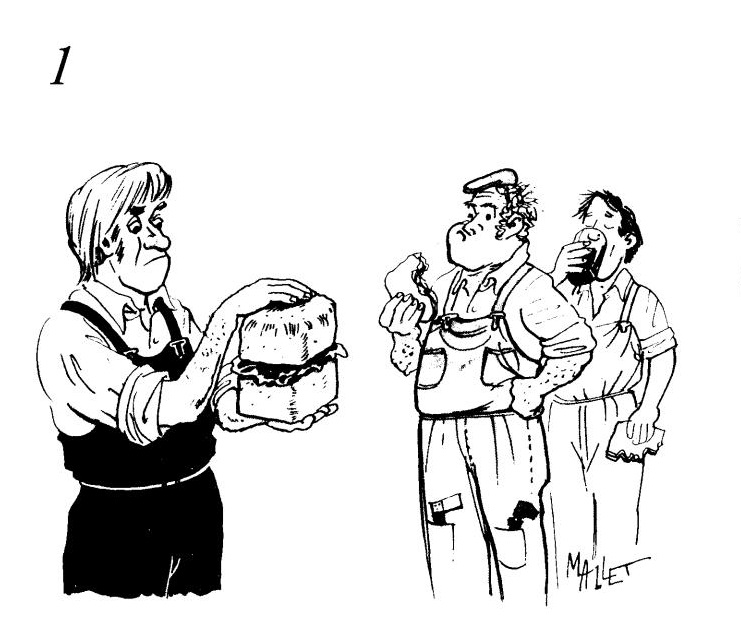
Dave worked in a factory, and he always made sandwiches in the morning, took them to work and ate them at midday. Then he married, so he thought, 'Now my wife's going to make my sandwiches.' On the first day, she made him some, and when he got home in the evening, she said to him, 'Were the sandwiches all right? 'Oh, yes,' he answered, 'but you only gave me two slices of bread. The next day she gave him four slices, but he said again, 'Four slices aren't enough.' The third day she gave him eight slices, but those were not enough for him either, so on the fourth day she took a loaf of bread, cut it in half and put a big piece of meat in it. In the evening she said to him, 'Was your lunch nice?" 'Oh, yes,' he answered. 'But two slices of bread aren't enough. 🔊 ترجمه متن
Dave worked in a factory, and he always made sandwiches in the morning, took them to work and ate them at midday. Then he married, so he thought, 'Now my wife's going to make my sandwiches.' On the first day, she made him some, and when he got home in the evening, she said to him, 'Were the sandwiches all right? 'Oh, yes,' he answered, 'but you only gave me two slices of bread. The next day she gave him four slices, but he said again, 'Four slices aren't enough.' The third day she gave him eight slices, but those were not enough for him either, so on the fourth day she took a loaf of bread, cut it in half and put a big piece of meat in it. In the evening she said to him, 'Was your lunch nice?" 'Oh, yes,' he answered. 'But two slices of bread aren't enough. 🔊 ترجمه متن
Passage 1
🔊
داستان شماره 1
Dave worked in a factory, and he always made sandwiches in the morning, took them to work and ate them at midday.
🔊
دِیو در یک کارخانه کار میکرد، و همیشه صبحانه ساندویچ درست میکرد، آنها را به سرکار میبرد و در ظهر میخورد.
Then he married, so he thought, ‘Now my wife’s going to make my sandwiches.’
🔊
سپس ازدواج کرد، پس او فکر کرد، «حالا همسرم ساندویچهای من را درست خواهد کرد.»
On the first day, she made him some, and when he got home in the evening, she said to him, ‘Were the sandwiches all right?’
🔊
در روز اول، او چندتا برایش درست کرد، و وقتی در شام به خانه رسید، از او پرسید، «آیا ساندویچها خوب بودند؟»
‘Oh, yes,’ he answered, 'but you only gave me two slices of bread.
🔊
«آره،» او جواب داد، «ولی شما فقط دو برش نان به من دادید.»
The next day she gave him four slices, but he said again, ‘Four slices aren’t enough.’
🔊
روز بعد، چهار برش نان داد، اما او دوباره گفت، «چهار برش کافی نیست.»
The third day she gave him eight slices, but those were not enough for him either, so on the fourth day she took a loaf of bread, cut it in half and put a big piece of meat in it.
🔊
در روز سوم، او هشت برش نان داد، اما آنها هم برایش کافی نبودند، بنابراین در روز چهارم، او یک قرص نان برداشت، آن را نصف کرد و یک تکه بزرگ گوشت درون آن قرار داد.
In the evening she said to him, ‘Was your lunch nice?’
🔊
در شام، او به او گفت، «غذای ظهر تو خوب بود؟»
‘Oh, yes,’ he answered. ‘But two slices of bread aren’t enough.’
🔊
«آره،» او جواب داد، «ولی دو برش نان کافی نیست.»
Passage 2
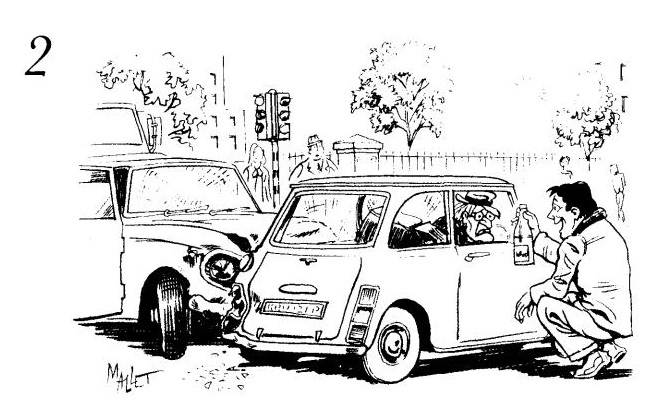
Harry did not stop his car at some traffic-lights when they were red, and he hit another car. Harry jumped out and went to it. There was an old man in the car. He was very frightened and said to Harry. 'What are you doing? You nearly killed me! Yes, Harry answered, I'm very sorry.' He took a bottle out of his car and said, 'Drink some of this. Then you'll feel better. He gave the man some whisky, and the man drank it, but then he shouted again, You nearly killed me! Harry gave him the bottle again, and the old man drank a lot of the whisky. Then he smiled and said to Harry, Thank you. I feel much better now. But why aren't you drinking?" 'Oh, well,' Harry answered, I don't want any whisky now. I'm going to sit here and wait for the police. 🔊 ترجمه متن
Harry did not stop his car at some traffic-lights when they were red, and he hit another car. Harry jumped out and went to it. There was an old man in the car. He was very frightened and said to Harry. 'What are you doing? You nearly killed me! Yes, Harry answered, I'm very sorry.' He took a bottle out of his car and said, 'Drink some of this. Then you'll feel better. He gave the man some whisky, and the man drank it, but then he shouted again, You nearly killed me! Harry gave him the bottle again, and the old man drank a lot of the whisky. Then he smiled and said to Harry, Thank you. I feel much better now. But why aren't you drinking?" 'Oh, well,' Harry answered, I don't want any whisky now. I'm going to sit here and wait for the police. 🔊 ترجمه متن
Passage 2
🔊
درس 2
Harry did not stop his car at some traffic-lights when they were red, and he hit another car.
🔊
هری هنگام قرمز بودن چراغ راهنمایی از خودروی خود متوقف نشد و به خودروی دیگری برخورد کرد.
Harry jumped out and went to it.
🔊
هری بیرون پرید و به سمت خودرو رفت.
There was an old man in the car.
🔊
پیرمردی در خودرو بود.
He was very frightened and said to Harry.
🔊
او بسیار ترسیده بود و به هری گفت:
‘What are you doing? You nearly killed me!’
🔊
«چه کار میکنی؟ نزدیک بود مرا بکشی!»
‘Yes, Harry answered, I’m very sorry.’
🔊
«بله، هری پاسخ داد، من واقعاً متاسفم.»
He took a bottle out of his car and said, 'Drink some of this. Then you’ll feel better.
🔊
او بطریای را از خودرویش بیرون آورد و گفت: «کمی از این بنوش. سپس احساس بهتری خواهی داشت.»
He gave the man some whisky, and the man drank it, but then he shouted again, ‘You nearly killed me!’
🔊
او مقداری ویسکی به مرد داد و مرد آن را نوشید، اما سپس دوباره فریاد زد: «نزدیک بود مرا بکشی!»
Harry gave him the bottle again, and the old man drank a lot of the whisky.
🔊
هری دوباره بطری را به او داد و پیرمرد مقدار زیادی از ویسکی را نوشید.
Then he smiled and said to Harry, 'Thank you. I feel much better now. But why aren’t you drinking?"
🔊
سپس لبخند زد و به هری گفت: «متشکرم. الان احساس بهتری دارم. اما چرا تو نمینوشی؟»
‘Oh, well,’ Harry answered, ‘I don’t want any whisky now. I’m going to sit here and wait for the police.’
🔊
«آه، خب،» هری پاسخ داد، «من الان ویسکی نمیخواهم. من اینجا مینشینم و منتظر پلیس میمانم.»
Passage 3
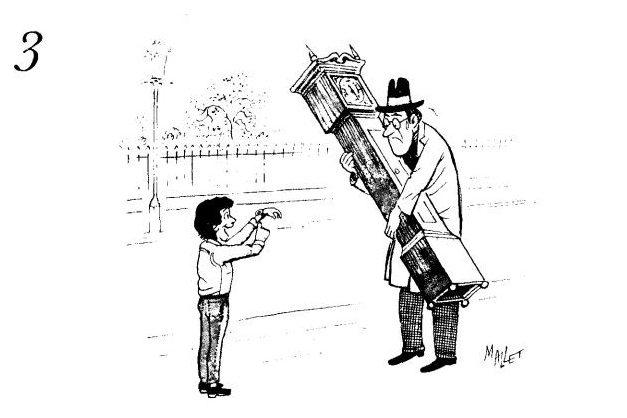
John lived with his mother in a rather big house, and when she died, the house became too big for him so he bought a smaller one in the next street. There was a very nice old clock in his first house, and when the men came to take his furniture to the new house, John thought, 'T'm not going to let them carry my beautiful old clock in their truck. Perhaps they'll break it, and then mending it will be very expensive.' So he picked it up and began to carry it down the road in his arms. It was heavy, so he stopped two or three times to have a rest. 'Then suddenly a small boy came along the road. He stopped and looked at John for a few seconds. Then he said to John, 'You're a stupid man, aren't you? Why don't you buy a watch like everybody else?" 🔊 ترجمه متن
John lived with his mother in a rather big house, and when she died, the house became too big for him so he bought a smaller one in the next street. There was a very nice old clock in his first house, and when the men came to take his furniture to the new house, John thought, 'T'm not going to let them carry my beautiful old clock in their truck. Perhaps they'll break it, and then mending it will be very expensive.' So he picked it up and began to carry it down the road in his arms. It was heavy, so he stopped two or three times to have a rest. 'Then suddenly a small boy came along the road. He stopped and looked at John for a few seconds. Then he said to John, 'You're a stupid man, aren't you? Why don't you buy a watch like everybody else?" 🔊 ترجمه متن
Passage 3
🔊
درس 3
John lived with his mother in a rather big house, and when she died, the house became too big for him so he bought a smaller one in the next street.
🔊
جان با مادرش در خانهای نسبتاً بزرگ زندگی میکرد، و وقتی او درگذشت، خانه برای او خیلی بزرگ شد، بنابراین او خانهی کوچکتری در خیابان بعدی خرید.
There was a very nice old clock in his first house, and when the men came to take his furniture to the new house, John thought, 'T’m not going to let them carry my beautiful old clock in their truck.
🔊
یک ساعت قدیمی و بسیار زیبا در خانهی اولش بود، و وقتی مردان آمدند تا اثاثیهاش را به خانهی جدید ببرند، جان فکر کرد: «من اجازه نمیدهم آنها ساعت قدیمی و زیبای من را در کامیونشان حمل کنند.»
‘Perhaps they’ll break it, and then mending it will be very expensive.’
🔊
«شاید آن را بشکنند، و سپس تعمیر آن بسیار گران خواهد بود.»
So he picked it up and began to carry it down the road in his arms.
🔊
بنابراین او آن را برداشت و شروع به حمل آن در آغوشش در طول جاده کرد.
It was heavy, so he stopped two or three times to have a rest.
🔊
سنگین بود، بنابراین او دو سه بار برای استراحت توقف کرد.
'Then suddenly a small boy came along the road.
🔊
«سپس ناگهان پسر بچهای در طول جاده آمد.
He stopped and looked at John for a few seconds.
🔊
او ایستاد و چند ثانیه به جان نگاه کرد.
Then he said to John, 'You’re a stupid man, aren’t you? Why don’t you buy a watch like everybody else?"
🔊
سپس به جان گفت: «تو مرد احمقی هستی، اینطور نیست؟ چرا مثل بقیه ساعت نمیخری؟»
Passage 4
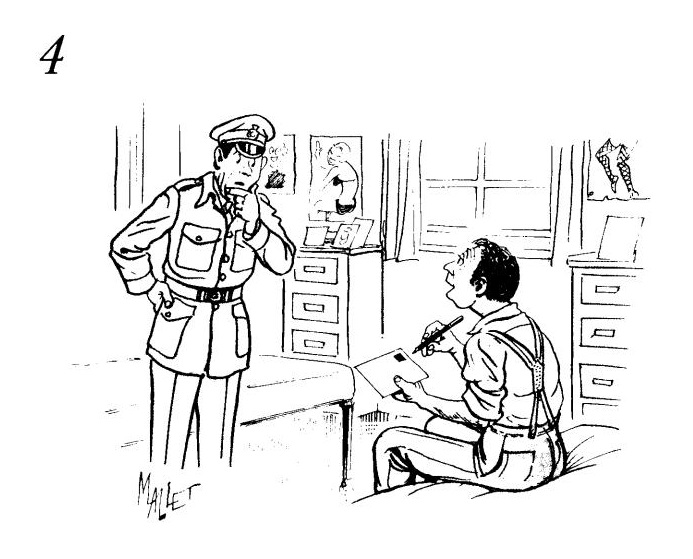
Two soldiers were in camp. The first one's name was George, and the second one's name was Bill. George said, 'Have you got a piece of paper and an envelope, Bill?' Bill said, 'Yes, I have, and he gave them to him. Then George said, 'Now I haven't got a pen.' Bill gave him his, and George wrote his letter. Then he put it in the envelope and said, 'Have you got a stamp, Bill?' Bill gave him one. 'Then Bill got up and went to the door, so George said to him, 'Are you going out?" Bill said, 'Yes, I am,' and he opened the door. George said, 'Please put my letter in the box in the office, and... He stopped. 'What do you want now?" Bill said to him. George looked at the envelope of his letter and answered, 'What's your girl-friend's address?" 🔊 ترجمه متن
Two soldiers were in camp. The first one's name was George, and the second one's name was Bill. George said, 'Have you got a piece of paper and an envelope, Bill?' Bill said, 'Yes, I have, and he gave them to him. Then George said, 'Now I haven't got a pen.' Bill gave him his, and George wrote his letter. Then he put it in the envelope and said, 'Have you got a stamp, Bill?' Bill gave him one. 'Then Bill got up and went to the door, so George said to him, 'Are you going out?" Bill said, 'Yes, I am,' and he opened the door. George said, 'Please put my letter in the box in the office, and... He stopped. 'What do you want now?" Bill said to him. George looked at the envelope of his letter and answered, 'What's your girl-friend's address?" 🔊 ترجمه متن
Passage 4
🔊
درس 4
Two soldiers were in camp.
🔊
دو سرباز در اردوگاه بودند.
The first one’s name was George, and the second one’s name was Bill.
🔊
اسم اولی جورج و اسم دومی بیل بود.
George said, ‘Have you got a piece of paper and an envelope, Bill?’
🔊
جورج گفت: «کاغذ و پاکت نامهای داری، بیل؟»
Bill said, 'Yes, I have, and he gave them to him.
🔊
بیل گفت: «بله دارم،» و آنها را به او داد.
Then George said, ‘Now I haven’t got a pen.’
🔊
سپس جورج گفت: «حالا قلم ندارم.»
Bill gave him his, and George wrote his letter.
🔊
بیل قلمش را به او داد، و جورج نامهاش را نوشت.
Then he put it in the envelope and said, ‘Have you got a stamp, Bill?’
🔊
سپس آن را در پاکت گذاشت و گفت: «تمبر داری، بیل؟»
Bill gave him one.
🔊
بیل یکی به او داد.
'Then Bill got up and went to the door, so George said to him, 'Are you going out?"
🔊
«سپس بیل بلند شد و به سمت در رفت، بنابراین جورج به او گفت: «داری بیرون میروی؟»
Bill said, ‘Yes, I am,’ and he opened the door.
🔊
بیل گفت: «بله، دارم،» و در را باز کرد.
George said, ‘Please put my letter in the box in the office, and…’
🔊
جورج گفت: «لطفا نامهام را در صندوق دفتر بگذار، و…»
He stopped.
🔊
او مکث کرد.
‘What do you want now?’ Bill said to him.
🔊
«حالا چه میخواهی؟» بیل به او گفت.
George looked at the envelope of his letter and answered, 'What’s your girl-friend’s address?"
🔊
جورج به پاکت نامهاش نگاه کرد و جواب داد: «آدرس دوست دخترت چیست؟»
Passage 5
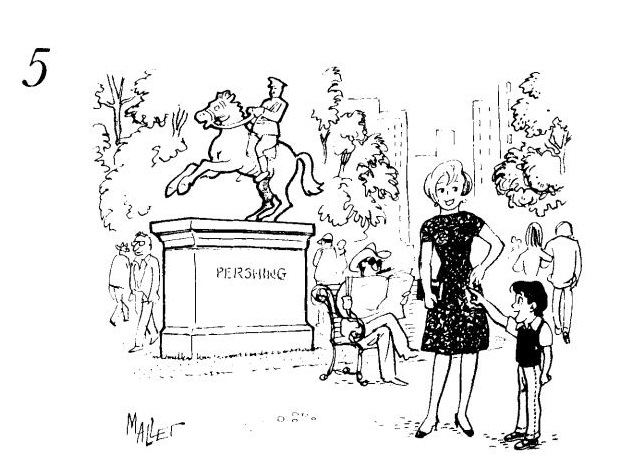
General Pershing was a famous American oflicer. He was in the American army, and fought in Europe in the First World War. After he died, some people in his home town wanted to remember him, so they put up a big statue of him on a horse. There was a school ncar the statue, and some of the boys passed it every day on their way to school and again on their way home. After a few months some of them began to say, 'Good morning, Pershing', whenever they passed the statue, and soon all the boys at the school were doing this. One Saturday one of the smallest of these boys was walking to the shops with his mother when he passed the statue. He said, 'Good morning, Pershing' to it, but then he stopped and said to his mother, I like Pershing very much. Ma, but who's that funny man on his back?" 🔊 ترجمه متن
General Pershing was a famous American oflicer. He was in the American army, and fought in Europe in the First World War. After he died, some people in his home town wanted to remember him, so they put up a big statue of him on a horse. There was a school ncar the statue, and some of the boys passed it every day on their way to school and again on their way home. After a few months some of them began to say, 'Good morning, Pershing', whenever they passed the statue, and soon all the boys at the school were doing this. One Saturday one of the smallest of these boys was walking to the shops with his mother when he passed the statue. He said, 'Good morning, Pershing' to it, but then he stopped and said to his mother, I like Pershing very much. Ma, but who's that funny man on his back?" 🔊 ترجمه متن
Passage 5
🔊
درس 5
General Pershing was a famous American officer.
🔊
ژنرال پرشینگ یک افسر مشهور آمریکایی بود.
He was in the American army, and fought in Europe in the First World War.
🔊
او در ارتش آمریکا بود و در جنگ جهانی اول در اروپا جنگید.
After he died, some people in his home town wanted to remember him, so they put up a big statue of him on a horse.
🔊
بعد از اینکه او درگذشت، برخی از مردم در شهر زادگاهش میخواستند او را به یاد داشته باشند، بنابراین مجسمه بزرگی از او سوار بر اسب برپا کردند.
There was a school near the statue, and some of the boys passed it every day on their way to school and again on their way home.
🔊
مدرسهای نزدیک مجسمه بود و برخی از پسرها هر روز در مسیر رفتن به مدرسه و دوباره در مسیر بازگشت به خانه، از کنار آن میگذشتند.
After a few months some of them began to say, ‘Good morning, Pershing’, whenever they passed the statue, and soon all the boys at the school were doing this.
🔊
پس از چند ماه برخی از آنها شروع کردند به اینکه هر وقت از کنار مجسمه میگذشتند بگویند «صبح بخیر، پرشینگ»، و بهزودی همه پسرهای مدرسه این کار را انجام میدادند.
One Saturday one of the smallest of these boys was walking to the shops with his mother when he passed the statue.
🔊
یک شنبه یکی از کوچکترینِ این پسرها در حال قدم زدن به سمت مغازهها با مادرش بود که از کنار مجسمه گذشت.
He said, ‘Good morning, Pershing’ to it, but then he stopped and said to his mother, ‘I like Pershing very much, Ma, but who’s that funny man on his back?’
🔊
او به مجسمه گفت «صبح بخیر، پرشینگ»، اما بعد ایستاد و به مادرش گفت: «مامان، من پرشینگ را خیلی دوست دارم، اما آن مرد بامزه که پشت او سوار است، کیست؟»
Passage 6
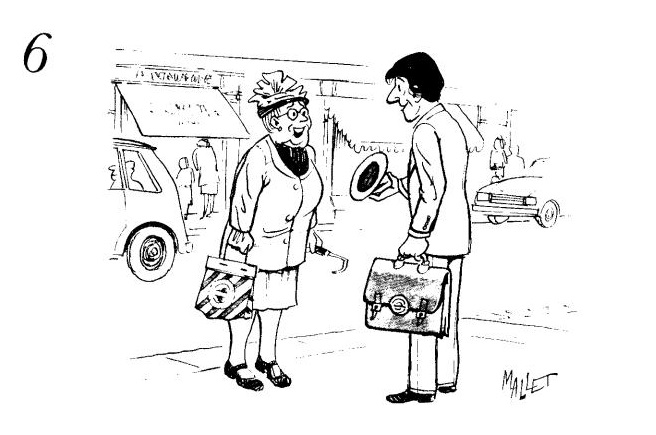
Jack worked in an oflice in a small town. One day his boss said to him, Jack, I want you to go to Manchester, to an oflice there, to see Mr Brown. Here's the address." Jack went to Manchester by train. He left the station, and thought, "The office isn't far from the station. I'll find it easily. But after an hour he was still looking for it, so he stopped and asked an old lady. She said, 'Go straight along this street, turn to the left at the end, and it's the second building on the right.' Jack went and found it. A few days later he went to the same city, but again he did not find the office, so he asked somcone the way. It was the same old lady! She was very surprised and said, 'Are you still looking for that place? 🔊 ترجمه متن
Jack worked in an oflice in a small town. One day his boss said to him, Jack, I want you to go to Manchester, to an oflice there, to see Mr Brown. Here's the address." Jack went to Manchester by train. He left the station, and thought, "The office isn't far from the station. I'll find it easily. But after an hour he was still looking for it, so he stopped and asked an old lady. She said, 'Go straight along this street, turn to the left at the end, and it's the second building on the right.' Jack went and found it. A few days later he went to the same city, but again he did not find the office, so he asked somcone the way. It was the same old lady! She was very surprised and said, 'Are you still looking for that place? 🔊 ترجمه متن
Passage 6
🔊
درس 6
Jack worked in an office in a small town.
🔊
جک در یک دفتر در یک شهر کوچک کار میکرد.
One day his boss said to him, Jack, I want you to go to Manchester, to an office there, to see Mr Brown. Here’s the address.
🔊
یک روز رئیسش به او گفت: «جک، میخواهم به منچستر بروی، به دفتری آنجا، تا آقای براون را ببینی. این هم آدرس.»
Jack went to Manchester by train.
🔊
جک با قطار به منچستر رفت.
He left the station, and thought, “The office isn’t far from the station. I’ll find it easily.”
🔊
او از ایستگاه خارج شد و با خود فکر کرد: «دفتر از ایستگاه دور نیست. راحت پیدایش میکنم.»
But after an hour he was still looking for it, so he stopped and asked an old lady.
🔊
اما بعد از یک ساعت هنوز دنبال آن میگشت، پس ایستاد و از یک خانم سالخورده پرسید.
She said, ‘Go straight along this street, turn to the left at the end, and it’s the second building on the right.’
🔊
او گفت: «در امتداد این خیابان مستقیم برو، آخر خیابان به چپ بپیچ، و آن ساختمان دوم در سمت راست است.»
Jack went and found it.
🔊
جک رفت و آن را پیدا کرد.
A few days later he went to the same city, but again he did not find the office, so he asked someone the way.
🔊
چند روز بعد او دوباره به همان شهر رفت، اما باز هم دفتر را پیدا نکرد، پس از کسی آدرس پرسید.
It was the same old lady!
🔊
او همان خانم سالخورده بود!
She was very surprised and said, ‘Are you still looking for that place?’
🔊
او خیلی تعجب کرد و گفت: «هنوز هم دنبال آن جا میگردی؟»
Passage 7
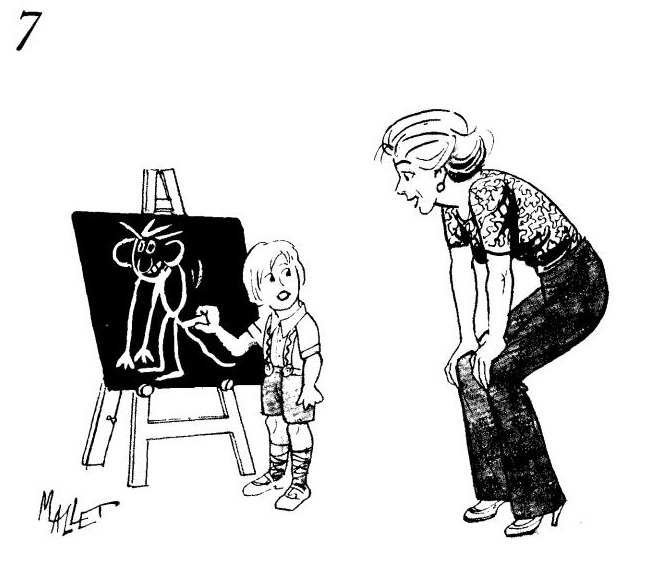
When Billy was very small, he loved pictures. His mother often drew some for him on old pieces of paper. She was very bad at drawing, but Billy enjoyed her pictures and always wanted more. Then, when he was a little older, Billy's mother gave him some pencils and a drawing book, and he began drawing pictures too, but they were never good. When Billy was five ycars old, his mother gave him a small blackboard, some pieces of chalk and a duster. He liked those very much. One day he was trying to draw a picture of his father on the blackboard. He drew lines and rubbed them out, drew more and rubbed those out too for ten minutes, but when he looked at his picture he was not happy. 'Well,' he said at last to his mother, T'll put a tail on it and make it a monkey. 🔊 ترجمه متن
When Billy was very small, he loved pictures. His mother often drew some for him on old pieces of paper. She was very bad at drawing, but Billy enjoyed her pictures and always wanted more. Then, when he was a little older, Billy's mother gave him some pencils and a drawing book, and he began drawing pictures too, but they were never good. When Billy was five ycars old, his mother gave him a small blackboard, some pieces of chalk and a duster. He liked those very much. One day he was trying to draw a picture of his father on the blackboard. He drew lines and rubbed them out, drew more and rubbed those out too for ten minutes, but when he looked at his picture he was not happy. 'Well,' he said at last to his mother, T'll put a tail on it and make it a monkey. 🔊 ترجمه متن
Passage 7
🔊
درس 7
When Billy was very small, he loved pictures.
🔊
وقتی بیلی خیلی کوچک بود، او عاشق عکسها بود.
His mother often drew some for him on old pieces of paper.
🔊
مادرش اغلب آنها را برای او روی تکههای قدیمی کاغذ میکشید.
She was very bad at drawing, but Billy enjoyed her pictures and always wanted more.
🔊
او در نقاشی کردن خیلی بد بود، اما بیلی از نقاشیهای او لذت میبرد و همیشه نقاشیهای بیشتری میخواست.
Then, when he was a little older, Billy’s mother gave him some pencils and a drawing book, and he began drawing pictures too, but they were never good.
🔊
سپس، وقتی کمی بزرگتر شد، مادر بیلی به او مداد و یک دفتر طراحی داد، و او نیز شروع به کشیدن نقاشی کرد، اما نقاشیهایش هرگز خوب نبودند.
When Billy was five years old, his mother gave him a small blackboard, some pieces of chalk and a duster.
🔊
وقتی بیلی پنج ساله بود، مادرش یک تخته سیاه کوچک، مقداری گچ و یک تخته پاککن به او داد.
He liked those very much.
🔊
او آنها را خیلی دوست داشت.
One day he was trying to draw a picture of his father on the blackboard.
🔊
یک روز او در حال تلاش برای کشیدن نقاشی پدرش روی تخته سیاه بود.
He drew lines and rubbed them out, drew more and rubbed those out too for ten minutes, but when he looked at his picture he was not happy.
🔊
او خطوطی کشید و پاکشان کرد، خطوط بیشتری کشید و آنها را نیز برای ده دقیقه پاک کرد، اما وقتی به نقاشیاش نگاه کرد، خوشحال نبود.
‘Well,’ he said at last to his mother, ‘I’ll put a tail on it and make it a monkey.’
🔊
«خب،» او بالاخره به مادرش گفت: «من یک دم به آن اضافه میکنم و آن را تبدیل به یک میمون میکنم.»
Passage 8
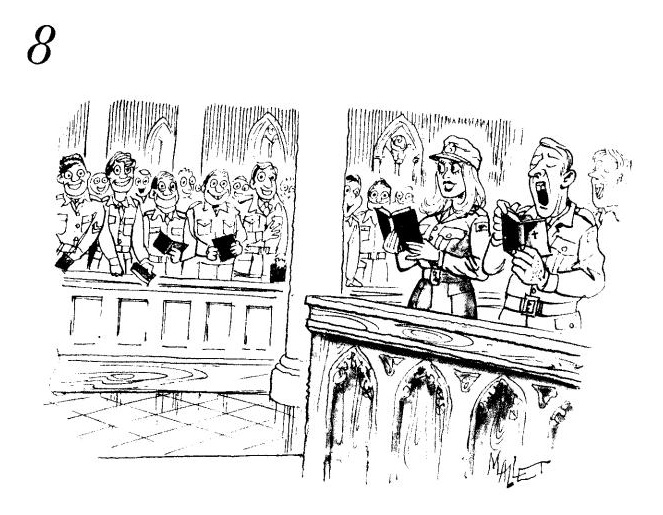
There were men soldiers and women soldiers in an army camp, and every Sunday morning they all went to church, but a lot of the soldiers did not like it much. There was a choir of men soldiers, and Captain Jones was trying to find women soldiers to sing in it too, but none of the ones in the camp offered to do this. Then one day Captain Jones saw a new girl soldier. She was a tall, very beautiful girl. Captain Jones went to her and said, 'Will you come and sing in the choir at our church, please?" The girl was very surprised and said, 'But, sir, I can't sing at all! Oh, that's all right,' answered Captain Jones. "That doesn't matter at all. You don't need to sing: I only want someone to keep the men soldiers looking in front of them when they are in the church.' 🔊 ترجمه متن
There were men soldiers and women soldiers in an army camp, and every Sunday morning they all went to church, but a lot of the soldiers did not like it much. There was a choir of men soldiers, and Captain Jones was trying to find women soldiers to sing in it too, but none of the ones in the camp offered to do this. Then one day Captain Jones saw a new girl soldier. She was a tall, very beautiful girl. Captain Jones went to her and said, 'Will you come and sing in the choir at our church, please?" The girl was very surprised and said, 'But, sir, I can't sing at all! Oh, that's all right,' answered Captain Jones. "That doesn't matter at all. You don't need to sing: I only want someone to keep the men soldiers looking in front of them when they are in the church.' 🔊 ترجمه متن
Passage 8
🔊
درس 8
There were men soldiers and women soldiers in an army camp, and every Sunday morning they all went to church, but a lot of the soldiers did not like it much.
🔊
در یک اردوگاه نظامی، سربازان مرد و زن وجود داشتند و هر صبح یکشنبه همه آنها به کلیسا میرفتند، اما بسیاری از سربازان از این کار زیاد خوششان نمیآمد.
There was a choir of men soldiers, and Captain Jones was trying to find women soldiers to sing in it too, but none of the ones in the camp offered to do this.
🔊
گروه سرودی از سربازان مرد وجود داشت، و کاپیتان جونز تلاش میکرد تا سربازان زنی را پیدا کند که در آن بخوانند، اما هیچکدام از سربازان زن در اردوگاه داوطلب نشدند.
Then one day Captain Jones saw a new girl soldier.
🔊
سپس یک روز کاپیتان جونز یک سرباز دختر جدید را دید.
She was a tall, very beautiful girl.
🔊
او دختری قد بلند و بسیار زیبا بود.
Captain Jones went to her and said, ‘Will you come and sing in the choir at our church, please?’
🔊
کاپیتان جونز به سمت او رفت و گفت: «لطفاً میآیید و در گروه سرود کلیسای ما بخوانید؟»
The girl was very surprised and said, ‘But, sir, I can’t sing at all!’
🔊
دختر خیلی تعجب کرد و گفت: «اما قربان، من اصلاً نمیتوانم آواز بخوانم!»
‘Oh, that’s all right,’ answered Captain Jones. "That doesn’t matter at all. You don’t need to sing: I only want someone to keep the men soldiers looking in front of them when they are in the church.’
🔊
«اوه، اشکالی ندارد،» کاپیتان جونز پاسخ داد. «اصلاً مهم نیست. شما لازم نیست آواز بخوانید: من فقط کسی را میخواهم که وقتی سربازان مرد در کلیسا هستند، جلوی خودشان را نگاه کنند.»
Passage 9
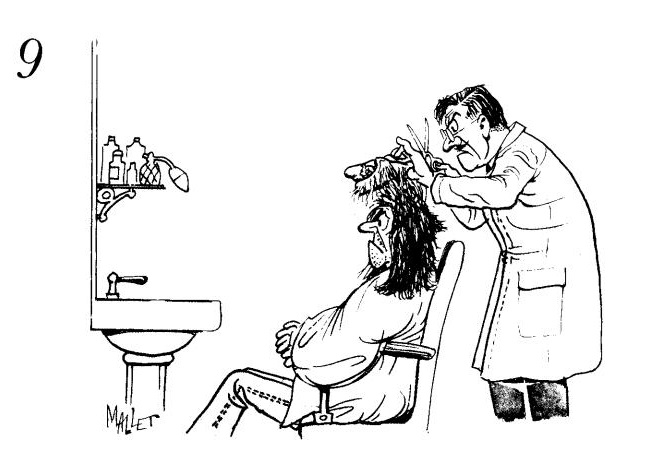
Len was thirty years old, and he had very long hair. He lived in a big city, but one year he did not find any work there, so he went to a small town and began looking for work there. He went to a lot of places, but nobody wanted him. Then he met an old friend, and this man said to him, 'People in this town don't like long hair. Why don't you go to a barber? Не can cut a lot of it off, and then you can get some work.' Len went to a barber and said, 'Please cut most of my hair off. The barber began. He cut and cut for a long time and then he said to Len, 'Were you in the army a few years ago?" 'Yes, I was,' Len answered. 'Why did you ask that? 'Because I've found your cap,' the barber said. 🔊 ترجمه متن
Len was thirty years old, and he had very long hair. He lived in a big city, but one year he did not find any work there, so he went to a small town and began looking for work there. He went to a lot of places, but nobody wanted him. Then he met an old friend, and this man said to him, 'People in this town don't like long hair. Why don't you go to a barber? Не can cut a lot of it off, and then you can get some work.' Len went to a barber and said, 'Please cut most of my hair off. The barber began. He cut and cut for a long time and then he said to Len, 'Were you in the army a few years ago?" 'Yes, I was,' Len answered. 'Why did you ask that? 'Because I've found your cap,' the barber said. 🔊 ترجمه متن
Passage 9
🔊
درس 9
Len was thirty years old, and he had very long hair.
🔊
لن سی ساله بود و موهای خیلی بلندی داشت.
He lived in a big city, but one year he did not find any work there, so he went to a small town and began looking for work there.
🔊
او در یک شهر بزرگ زندگی میکرد، اما یک سال نتوانست در آنجا کاری پیدا کند، پس به یک شهر کوچک رفت و شروع به جستجوی کار در آنجا کرد.
He went to a lot of places, but nobody wanted him.
🔊
او به جاهای زیادی رفت، اما هیچکس او را نمیخواست.
Then he met an old friend, and this man said to him, ‘People in this town don’t like long hair. Why don’t you go to a barber? He can cut a lot of it off, and then you can get some work.’
🔊
بعد با یک دوست قدیمی روبهرو شد و آن مرد به او گفت: «مردم این شهر موهای بلند را دوست ندارند. چرا به آرایشگر نمیروی؟ او میتواند مقدار زیادی از آن را کوتاه کند، و آنوقت میتوانی کاری پیدا کنی.»
Len went to a barber and said, 'Please cut most of my hair off.
🔊
لن به آرایشگر رفت و گفت: «لطفاً بیشتر موهایم را کوتاه کن.»
The barber began.
🔊
آرایشگر شروع کرد.
He cut and cut for a long time and then he said to Len, 'Were you in the army a few years ago?"
🔊
او مدت زیادی کوتاه کرد و کوتاه کرد، و بعد به لن گفت: «چند سال پیش در ارتش بودی؟»
‘Yes, I was,’ Len answered. 'Why did you ask that?
🔊
«بله، بودم،» لن جواب داد. «چرا این را پرسیدی؟»
‘Because I’ve found your cap,’ the barber said.
🔊
«چون کلاهت را پیدا کردهام،» آرایشگر گفت.
Passage 10
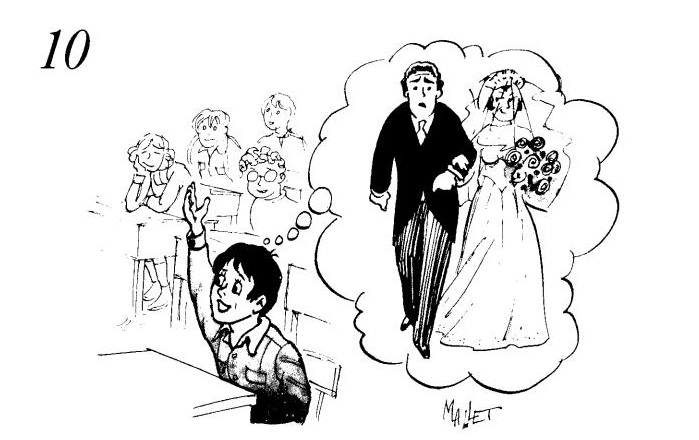
Mrs Robinson was a teacher in a big school in a city in America. She had boys and girls in her class, and she always enjoyed teaching them, because they were quick, and because they thought about everything carefully. One day she said to the children, 'People in a lot of countries in Asia wear white clothes at funerals, but people in America and in Europe wear white clothes when they're happy. What colour does a woman wear in this country when she marries, Mary? Mary said, 'White, Miss, because she's happy. "That's good, Mary,' Mrs Robinson said. 'You're quite right. She wears white because she's happy. But then one of the boys in the class put his hand up. "Yes, Dick!' Mrs Robinson said. 'Do you want to ask something? Yes, please, Miss,' Dick said. 'Why do men wear black in this country when they marry, Miss? 🔊 ترجمه متن
Mrs Robinson was a teacher in a big school in a city in America. She had boys and girls in her class, and she always enjoyed teaching them, because they were quick, and because they thought about everything carefully. One day she said to the children, 'People in a lot of countries in Asia wear white clothes at funerals, but people in America and in Europe wear white clothes when they're happy. What colour does a woman wear in this country when she marries, Mary? Mary said, 'White, Miss, because she's happy. "That's good, Mary,' Mrs Robinson said. 'You're quite right. She wears white because she's happy. But then one of the boys in the class put his hand up. "Yes, Dick!' Mrs Robinson said. 'Do you want to ask something? Yes, please, Miss,' Dick said. 'Why do men wear black in this country when they marry, Miss? 🔊 ترجمه متن
Passage 10
🔊
درس 10
Mrs Robinson was a teacher in a big school in a city in America.
🔊
خانم رابینسون معلمی در یک مدرسه بزرگ در شهری در آمریکا بود.
She had boys and girls in her class, and she always enjoyed teaching them, because they were quick, and because they thought about everything carefully.
🔊
در کلاس او پسرها و دخترهایی بودند، و او همیشه از تدریس به آنها لذت میبرد، زیرا آنها تیزهوش بودند و با دقت درباره همه چیز فکر میکردند.
One day she said to the children, 'People in a lot of countries in Asia wear white clothes at funerals, but people in America and in Europe wear white clothes when they’re happy.
🔊
یک روز او به بچهها گفت: «مردم در بسیاری از کشورهای آسیا هنگام مراسم خاکسپاری لباس سفید میپوشند، اما مردم در آمریکا و اروپا وقتی خوشحال هستند لباس سفید میپوشند.
What colour does a woman wear in this country when she marries, Mary?
🔊
یک زن در این کشور وقتی ازدواج میکند چه رنگی میپوشد، مری؟»
Mary said, 'White, Miss, because she’s happy.
🔊
مری گفت: «سفید، خانم، چون او خوشحال است.»
"That’s good, Mary,’ Mrs Robinson said. 'You’re quite right. She wears white because she’s happy.
🔊
«آفرین، مری،» خانم رابینسون گفت. «کاملاً درست میگویی. او سفید میپوشد چون خوشحال است.»
But then one of the boys in the class put his hand up.
🔊
اما بعد یکی از پسرهای کلاس دستش را بالا برد.
"Yes, Dick!’ Mrs Robinson said. 'Do you want to ask something?
🔊
«بله، دیک!» خانم رابینسون گفت. «میخواهی چیزی بپرسی؟»
Yes, please, Miss,’ Dick said. 'Why do men wear black in this country when they marry, Miss?
🔊
«بله، لطفاً خانم،» دیک گفت. «چرا مردها در این کشور وقتی ازدواج میکنند، لباس سیاه میپوشند، خانم؟»
Passage 11
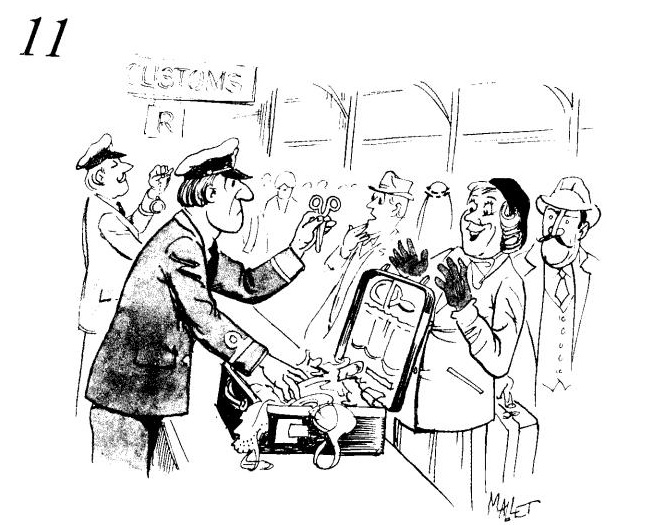
A few ycars ago, there were a lot of hijackings on acroplanes, so now people always scarch passengers and their luggage at airports before they let them get into an aeroplane, because they do not want them to take guns or bombs or other dangerous things on to the plane with them. Mr and Mrs Smith were singers, and they travelled a lot. When- ever they went by plane, people searched them and their luggage, of course. One day, Mr Smith came to the airport, and the men searched him and his luggage first. He was ready to get on the plane. Then Mrs Smith arrived. She was late and in a hurry, but the people searched her and her bag carefully. Then Mr Smith heard her laugh and say to the men happily, 'Oh, that's very good! I've looked for those scissors for several days, and now ow you've found them for me! Thank you very much! 🔊 ترجمه متن
A few ycars ago, there were a lot of hijackings on acroplanes, so now people always scarch passengers and their luggage at airports before they let them get into an aeroplane, because they do not want them to take guns or bombs or other dangerous things on to the plane with them. Mr and Mrs Smith were singers, and they travelled a lot. When- ever they went by plane, people searched them and their luggage, of course. One day, Mr Smith came to the airport, and the men searched him and his luggage first. He was ready to get on the plane. Then Mrs Smith arrived. She was late and in a hurry, but the people searched her and her bag carefully. Then Mr Smith heard her laugh and say to the men happily, 'Oh, that's very good! I've looked for those scissors for several days, and now ow you've found them for me! Thank you very much! 🔊 ترجمه متن
Passage 11
🔊
درس 11
A few years ago, there were a lot of hijackings on aeroplanes, so now people always search passengers and their luggage at airports before they let them get into an aeroplane, because they do not want them to take guns or bombs or other dangerous things on to the plane with them.
🔊
چند سال پیش، هواپیمارباییهای زیادی در هواپیماها رخ داد، بنابراین اکنون مردم همیشه مسافران و چمدانهایشان را در فرودگاهها جستجو میکنند قبل از اینکه به آنها اجازه سوار شدن به هواپیما را بدهند، زیرا نمیخواهند آنها سلاح گرم، بمب یا چیزهای خطرناک دیگری را با خود به داخل هواپیما ببرند.
Mr and Mrs Smith were singers, and they travelled a lot.
🔊
آقای و خانم اسمیت خواننده بودند و زیاد سفر میکردند.
Whenever they went by plane, people searched them and their luggage, of course.
🔊
هر وقت با هواپیما سفر میکردند، البته مردم آنها و چمدانهایشان را جستجو میکردند.
One day, Mr Smith came to the airport, and the men searched him and his luggage first.
🔊
یک روز، آقای اسمیت به فرودگاه آمد و مردان ابتدا او و چمدانش را جستجو کردند.
He was ready to get on the plane.
🔊
او آماده سوار شدن به هواپیما بود.
Then Mrs Smith arrived.
🔊
سپس خانم اسمیت رسید.
She was late and in a hurry, but the people searched her and her bag carefully.
🔊
او دیر کرده بود و عجله داشت، اما مردم او و کیفش را با دقت جستجو کردند.
Then Mr Smith heard her laugh and say to the men happily, ‘Oh, that’s very good! I’ve looked for those scissors for several days, and now you’ve found them for me! Thank you very much!’
🔊
سپس آقای اسمیت صدای خنده او را شنید که با خوشحالی به مردان میگفت: «اوه، خیلی خوب است! من چند روزی بود که دنبال این قیچی میگشتم و حالا شما آن را برای من پیدا کردید! خیلی ممنونم!»
Passage 12
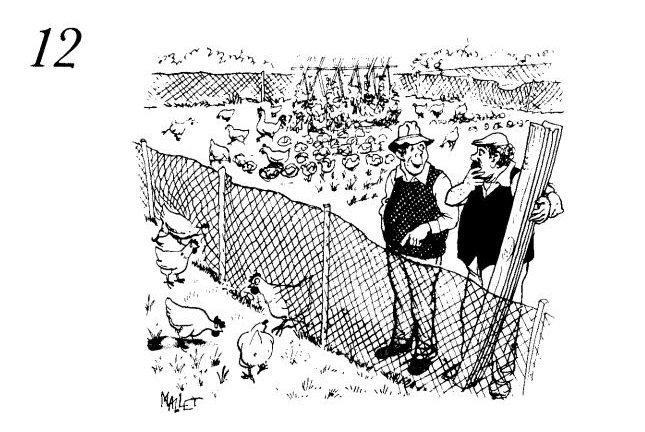
Mick lived in the country, and he had quite a big garden. He grew vegetables, and he had some nice, fat chickens too. He sold the eggs and the meat, and got quite a lot of money for them. His neighbour had a big garden too, and he also had vegetables and nice, fat chickens in it. There was a wire fence between the gardens, but it was very old, and the chickens often found holes in it and went through. Now Mick wanted a new fence between his garden and his neigh- bour's, so Mr Biggs came to build it. Mick said to him, 'Please make the fence out of strong wood. And I want a hole in it. Make it big enough for my chickens to get into my neighbour's garden and eat his vegetables, but too small for his to get into mine and eat mine. 🔊 ترجمه متن
Mick lived in the country, and he had quite a big garden. He grew vegetables, and he had some nice, fat chickens too. He sold the eggs and the meat, and got quite a lot of money for them. His neighbour had a big garden too, and he also had vegetables and nice, fat chickens in it. There was a wire fence between the gardens, but it was very old, and the chickens often found holes in it and went through. Now Mick wanted a new fence between his garden and his neigh- bour's, so Mr Biggs came to build it. Mick said to him, 'Please make the fence out of strong wood. And I want a hole in it. Make it big enough for my chickens to get into my neighbour's garden and eat his vegetables, but too small for his to get into mine and eat mine. 🔊 ترجمه متن
Passage 12
🔊
درس 12
Mick lived in the country, and he had quite a big garden.
🔊
میک در حومه شهر زندگی میکرد و باغ نسبتاً بزرگی داشت.
He grew vegetables, and he had some nice, fat chickens too.
🔊
او سبزیجات میکاشت و چند مرغ چاق و دوستداشتنی هم داشت.
He sold the eggs and the meat, and got quite a lot of money for them.
🔊
او تخممرغها و گوشت مرغها را میفروخت و پول نسبتاً زیادی از این راه به دست میآورد.
His neighbour had a big garden too, and he also had vegetables and nice, fat chickens in it.
🔊
همسایه او نیز باغ بزرگی داشت و در آن سبزیجات و مرغهای چاق و دوستداشتنی پرورش میداد.
There was a wire fence between the gardens, but it was very old, and the chickens often found holes in it and went through.
🔊
یک حصار سیمی بین باغها وجود داشت، اما بسیار قدیمی بود و مرغها اغلب سوراخهایی در آن پیدا میکردند و از آن عبور میکردند.
Now Mick wanted a new fence between his garden and his neighbour’s, so Mr Biggs came to build it.
🔊
حالا میک حصاری جدید بین باغ خود و باغ همسایهاش میخواست، بنابراین آقای بیگس برای ساختن آن آمد.
Mick said to him, 'Please make the fence out of strong wood.
🔊
میک به او گفت: «لطفاً حصار را از چوب محکم بساز.»
And I want a hole in it.
🔊
«و من یک سوراخ در آن میخواهم.»
Make it big enough for my chickens to get into my neighbour’s garden and eat his vegetables, but too small for his to get into mine and eat mine.’
🔊
«آنقدر بزرگش کن که مرغهای من بتوانند وارد باغ همسایهام شوند و سبزیجات او را بخورند، اما آنقدر کوچک که مرغهای او نتوانند وارد باغ من شوند و مال مرا بخورند.»
Passage 13
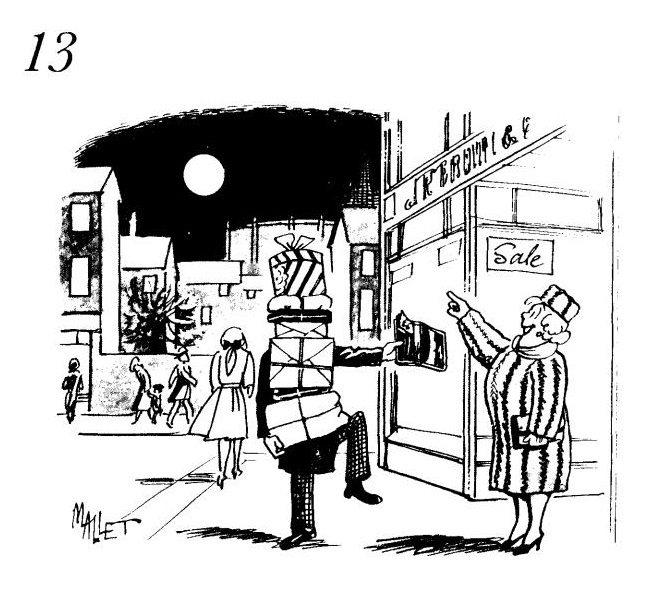
It was winter, and Mrs Hermann wanted to do a lot of shopping, so she waited until it was Saturday, when her husband was free, and she took him to the shops with her to pay for everything and to carry her parcels. They went to a lot of shops, and Mrs Hermann bought a lot of things. She often stopped and said, 'Look, Joe! Isn't that beauti- ful! He then answered, 'All right, dear. How much is it?' and took his money out to pay for it. It was dark when they came out of the last shop, and Mr Hermann. was tired and thinking about other things, like a nice drink by the side of a warm fire at home. Suddenly his wife looked up at the sky and said, 'Look at that beautiful moon, Joе!" Without stopping, Mr Hermann answered, 'All right, dear. How much is it?" 🔊 ترجمه متن
It was winter, and Mrs Hermann wanted to do a lot of shopping, so she waited until it was Saturday, when her husband was free, and she took him to the shops with her to pay for everything and to carry her parcels. They went to a lot of shops, and Mrs Hermann bought a lot of things. She often stopped and said, 'Look, Joe! Isn't that beauti- ful! He then answered, 'All right, dear. How much is it?' and took his money out to pay for it. It was dark when they came out of the last shop, and Mr Hermann. was tired and thinking about other things, like a nice drink by the side of a warm fire at home. Suddenly his wife looked up at the sky and said, 'Look at that beautiful moon, Joе!" Without stopping, Mr Hermann answered, 'All right, dear. How much is it?" 🔊 ترجمه متن
Passage 13
🔊
درس 13
It was winter, and Mrs Hermann wanted to do a lot of shopping, so she waited until it was Saturday, when her husband was free, and she took him to the shops with her to pay for everything and to carry her parcels.
🔊
زمستان بود و خانم هرمان میخواست خرید زیادی انجام دهد، بنابراین تا شنبه، زمانی که شوهرش آزاد بود، صبر کرد و او را با خود به مغازهها برد تا پول همه چیز را بپردازد و بستههایش را حمل کند.
They went to a lot of shops, and Mrs Hermann bought a lot of things.
🔊
آنها به مغازههای زیادی رفتند و خانم هرمان چیزهای زیادی خرید.
She often stopped and said, ‘Look, Joe! Isn’t that beautiful!’
🔊
او اغلب توقف میکرد و میگفت: «نگاه کن، جو! چقدر زیبا نیست!»
He then answered, ‘All right, dear. How much is it?’ and took his money out to pay for it.
🔊
او سپس پاسخ داد: «باشه عزیزم. قیمتش چقدر است؟» و پولش را برای پرداخت بیرون آورد.
It was dark when they came out of the last shop, and Mr Hermann was tired and thinking about other things, like a nice drink by the side of a warm fire at home.
🔊
وقتی از آخرین مغازه بیرون آمدند هوا تاریک بود و آقای هرمان خسته بود و به چیزهای دیگر فکر میکرد، مانند نوشیدنی دلپذیر کنار آتش گرم در خانه.
Suddenly his wife looked up at the sky and said, ‘Look at that beautiful moon, Joe!’
🔊
ناگهان زنش به آسمان نگاه کرد و گفت: «به آن ماه زیبا نگاه کن، جو!»
Without stopping, Mr Hermann answered, ‘All right, dear. How much is it?’
🔊
آقای هرمان بدون توقف پاسخ داد: «باشه عزیزم. قیمتش چقدر است؟»
Passage 14
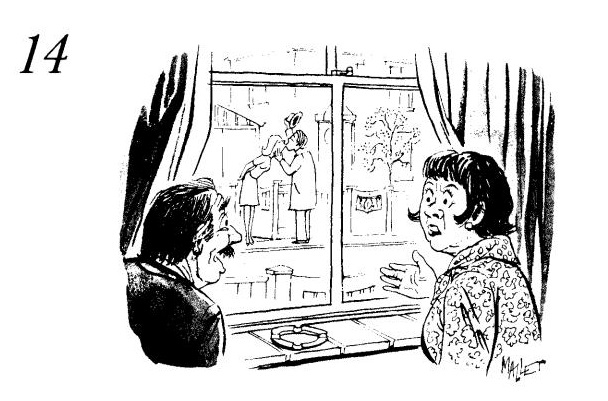
Mr and Mrs Smith married thirty years ago, and they have lived in the same house since then. Mr Smith goes to work at eight o'clock every morning, and he gets home at half past seven every evening, from Monday to Friday. There are quite a lot of houses in their street, and most of the neighbours are nice. But the old lady in the house opposite Mr and Mrs Smith died, and after a few weeks a young man and woman came to live in it. Mrs Smith watched them for a few days from her window and then she said to her husband, 'Bill, the man in that house opposite always kisses his wife when he leaves in the morning and he kisses her again when he comes home in the evening. Why don't you do that too?" Well Mr Smith answered, I don't know her very well yet.' 🔊 ترجمه متن
Mr and Mrs Smith married thirty years ago, and they have lived in the same house since then. Mr Smith goes to work at eight o'clock every morning, and he gets home at half past seven every evening, from Monday to Friday. There are quite a lot of houses in their street, and most of the neighbours are nice. But the old lady in the house opposite Mr and Mrs Smith died, and after a few weeks a young man and woman came to live in it. Mrs Smith watched them for a few days from her window and then she said to her husband, 'Bill, the man in that house opposite always kisses his wife when he leaves in the morning and he kisses her again when he comes home in the evening. Why don't you do that too?" Well Mr Smith answered, I don't know her very well yet.' 🔊 ترجمه متن
Passage 14
🔊
متن 14
Mr and Mrs Smith married thirty years ago, and they have lived in the same house since then.
🔊
آقای و خانم اسمیت سی سال پیش ازدواج کردند و از آن زمان در همان خانه زندگی کردهاند.
Mr Smith goes to work at eight o’clock every morning, and he gets home at half past seven every evening, from Monday to Friday.
🔊
آقای اسمیت هر روز صبح ساعت هشت به سر کار میرود و از دوشنبه تا جمعه، هر شب ساعت هفت و نیم به خانه برمیگردد.
There are quite a lot of houses in their street, and most of the neighbours are nice.
🔊
خانههای نسبتاً زیادی در خیابان آنها وجود دارد و بیشتر همسایهها خوب هستند.
But the old lady in the house opposite Mr and Mrs Smith died, and after a few weeks a young man and woman came to live in it.
🔊
اما پیرزنی که در خانه مقابل آقای و خانم اسمیت زندگی میکرد فوت کرد و پس از چند هفته، یک زن و مرد جوان برای زندگی به آنجا آمدند.
Mrs Smith watched them for a few days from her window and then she said to her husband, 'Bill, the man in that house opposite always kisses his wife when he leaves in the morning and he kisses her again when he comes home in the evening.
🔊
خانم اسمیت چند روزی آنها را از پنجرهاش زیر نظر گرفت و سپس به شوهرش گفت: «بیل، آن مرد در خانه مقابل، هر روز صبح وقتی خانه را ترک میکند همسرش را میبوسد و شب هم وقتی به خانه برمیگردد دوباره او را میبوسد.»
Why don’t you do that too?’
🔊
«چرا تو هم این کار را نمیکنی؟»
Well Mr Smith answered, ‘I don’t know her very well yet.’
🔊
آقای اسمیت پاسخ داد: «خب، من هنوز او را خیلی خوب نمیشناسم.»
Passage 15
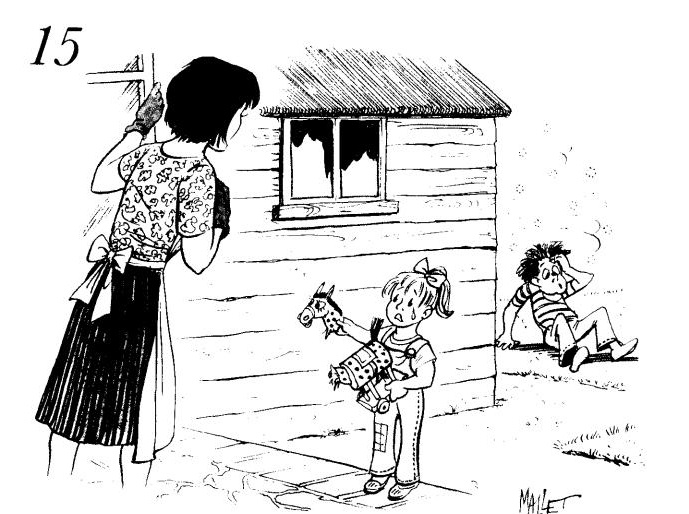
Mrs Peters had two children. Sammy was seven years old, and his sister Annie was four. Sammy went to school, but Annie did not. When Sammy was at home, he often played with Annic while their mother was cooking or washing or cleaning, and he was usually very nice to his small sister, and Mrs Peters was free to do her work quietly. One Saturday morning, the two children were playing in the garden while their mother was cooking the lunch. They were quite happy until Annic suddenly began to cry and ran into the kitchen to her mother. Mrs Peters stopped cooking and said, 'Why are you crying. Annie? Sammy's broken my toy horse, Annie answered, crying more loudly. 'How did he break it?' her mother asked. Annic stopped crying, but did not answer for a few seconds. Then she said, 'I hit him on the head with it. 🔊 ترجمه متن
Mrs Peters had two children. Sammy was seven years old, and his sister Annie was four. Sammy went to school, but Annie did not. When Sammy was at home, he often played with Annic while their mother was cooking or washing or cleaning, and he was usually very nice to his small sister, and Mrs Peters was free to do her work quietly. One Saturday morning, the two children were playing in the garden while their mother was cooking the lunch. They were quite happy until Annic suddenly began to cry and ran into the kitchen to her mother. Mrs Peters stopped cooking and said, 'Why are you crying. Annie? Sammy's broken my toy horse, Annie answered, crying more loudly. 'How did he break it?' her mother asked. Annic stopped crying, but did not answer for a few seconds. Then she said, 'I hit him on the head with it. 🔊 ترجمه متن
Passage 15
🔊
درس 15
Mrs Peters had two children.
🔊
خانم پیترز دو فرزند داشت.
Sammy was seven years old, and his sister Annie was four.
🔊
سامی هفت ساله بود و خواهرش آنی چهار ساله بود.
Sammy went to school, but Annie did not.
🔊
سامی به مدرسه میرفت، اما آنی نمیرفت.
When Sammy was at home, he often played with Annie while their mother was cooking or washing or cleaning, and he was usually very nice to his small sister, and Mrs Peters was free to do her work quietly.
🔊
وقتی سامی در خانه بود، اغلب در حالی که مادرشان مشغول آشپزی، شستشو یا نظافت بود، با آنی بازی میکرد؛ او معمولاً با خواهر کوچکش بسیار مهربان بود و خانم پیترز آزاد بود تا کارهایش را با آرامش انجام دهد.
One Saturday morning, the two children were playing in the garden while their mother was cooking the lunch.
🔊
یک صبح شنبه، دو کودک در باغچه مشغول بازی بودند در حالی که مادرشان داشت ناهار میپخت.
They were quite happy until Annie suddenly began to cry and ran into the kitchen to her mother.
🔊
آنها کاملاً خوشحال بودند تا اینکه آنی ناگهان شروع به گریه کرد و دواندوان به آشپزخانه نزد مادرش رفت.
Mrs Peters stopped cooking and said, ‘Why are you crying, Annie?’
🔊
خانم پیترز دست از آشپزی کشید و گفت: «چرا گریه میکنی، آنی؟»
‘Sammy’s broken my toy horse,’ Annie answered, crying more loudly.
🔊
آنی در حالی که بلندتر گریه میکرد، پاسخ داد: «سامی اسب اسباببازیام را شکسته است.»
‘How did he break it?’ her mother asked.
🔊
مادرش پرسید: «چطور آن را شکست؟»
Annie stopped crying, but did not answer for a few seconds.
🔊
آنی گریهاش را قطع کرد، اما برای چند ثانیه پاسخ نداد.
Then she said, ‘I hit him on the head with it.’
🔊
سپس گفت: «من با آن توی سرش زدم.»
Passage 16
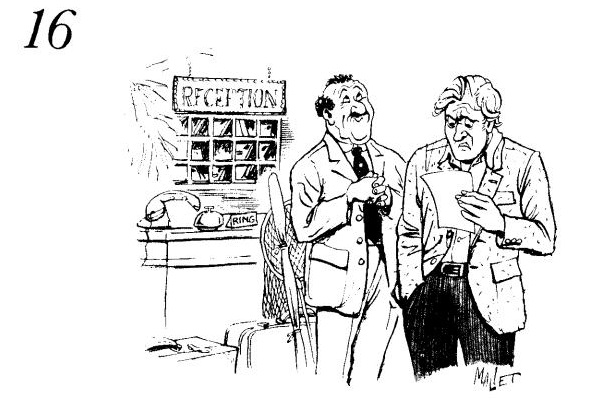
Ted worked in a factory in a big town. He liked fishing very much, and was very good at it. Whenever he was free, he went down to the small river behind the factory and tried to catch some fish, but there were very few there, because the water was dirty. Then one summer he went to the seaside during his holidays and stayed at a small, cheap hotel. 'I've never fished in the sea before. he thought. 'It will be rather different from fishing in our river. On the first day he caught a lot of fish and was very happy. He gave them to the hotel, and they cooked them for all the guests, and they enjoyed them very much. After that, he did this every day. But when Ted got his bill at the end of the week, he saw on it: 'For oil to fry fish (7 days): £3.50. 🔊 ترجمه متن
Ted worked in a factory in a big town. He liked fishing very much, and was very good at it. Whenever he was free, he went down to the small river behind the factory and tried to catch some fish, but there were very few there, because the water was dirty. Then one summer he went to the seaside during his holidays and stayed at a small, cheap hotel. 'I've never fished in the sea before. he thought. 'It will be rather different from fishing in our river. On the first day he caught a lot of fish and was very happy. He gave them to the hotel, and they cooked them for all the guests, and they enjoyed them very much. After that, he did this every day. But when Ted got his bill at the end of the week, he saw on it: 'For oil to fry fish (7 days): £3.50. 🔊 ترجمه متن
Passage 16
🔊
درس 16
Ted worked in a factory in a big town.
🔊
تد در کارخانهای در یک شهر بزرگ کار میکرد.
He liked fishing very much, and was very good at it.
🔊
او ماهیگیری را بسیار دوست داشت و در آن بسیار مهارت داشت.
Whenever he was free, he went down to the small river behind the factory and tried to catch some fish, but there were very few there, because the water was dirty.
🔊
هر وقت آزاد بود، به رودخانه کوچک پشت کارخانه میرفت و سعی میکرد مقداری ماهی بگیرد، اما ماهیهای خیلی کمی آنجا بودند، چون آب کثیف بود.
Then one summer he went to the seaside during his holidays and stayed at a small, cheap hotel.
🔊
سپس یک تابستان در طول تعطیلاتش به کنار دریا رفت و در یک هتل کوچک و ارزان اقامت کرد.
‘I’ve never fished in the sea before,’ he thought.
🔊
او فکر کرد: «من قبلاً هرگز در دریا ماهیگیری نکردهام.»
‘It will be rather different from fishing in our river.’
🔊
«این کار [ماهیگیری در دریا] با ماهیگیری در رودخانهمان کاملاً متفاوت خواهد بود.»
On the first day he caught a lot of fish and was very happy.
🔊
در روز اول او ماهیهای زیادی گرفت و بسیار خوشحال بود.
He gave them to the hotel, and they cooked them for all the guests, and they enjoyed them very much.
🔊
او آنها را به هتل داد و آنها ماهیها را برای همه مهمانان پختند و آنها [مهمانان] از خوردنشان بسیار لذت بردند.
After that, he did this every day.
🔊
بعد از آن، او هر روز این کار را انجام میداد.
But when Ted got his bill at the end of the week, he saw on it:
🔊
اما وقتی تد در پایان هفته صورتحسابش را دریافت کرد، روی آن دید:
‘For oil to fry fish (7 days): £3.50.’
🔊
«بابت روغن برای سرخ کردن ماهی (۷ روز): ۳.۵۰ پوند.»
Passage 17
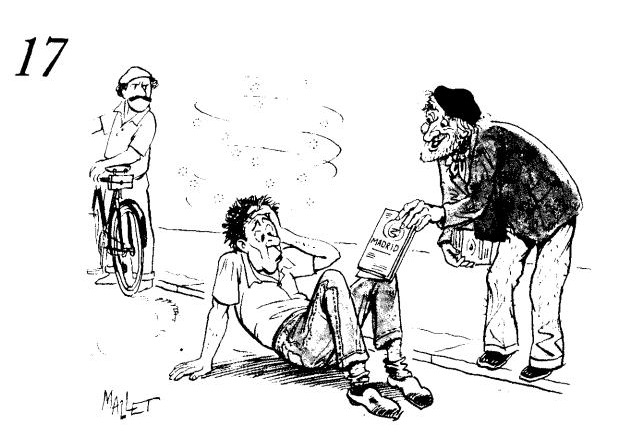
Nat lived in a small town in England. He always stayed in England for his holidays, but then last year he thought, I've never been outside this country. All my friends go to Spain, and they like it very much, so this year I'm going to go there too.' First he went to Madrid and stayed in a small hotel for a few days. On the first morning he went out for a walk. In England people drive on the left, but in Spain they drive on the right. Nat forgot about this, and while he was crossing a busy strect, a bicycle knocked him down. Nat lay on the ground for a few seconds and then he sat up and said, 'Where am I? An old man was selling maps at the side of the street, and he at once came to Nat and said, Map of the city, sir?" 🔊 ترجمه متن
Nat lived in a small town in England. He always stayed in England for his holidays, but then last year he thought, I've never been outside this country. All my friends go to Spain, and they like it very much, so this year I'm going to go there too.' First he went to Madrid and stayed in a small hotel for a few days. On the first morning he went out for a walk. In England people drive on the left, but in Spain they drive on the right. Nat forgot about this, and while he was crossing a busy strect, a bicycle knocked him down. Nat lay on the ground for a few seconds and then he sat up and said, 'Where am I? An old man was selling maps at the side of the street, and he at once came to Nat and said, Map of the city, sir?" 🔊 ترجمه متن
Passage 17
🔊
درس 17
Nat lived in a small town in England.
🔊
نَت در یک شهر کوچک در انگلستان زندگی میکرد.
He always stayed in England for his holidays, but then last year he thought, I’ve never been outside this country.
🔊
او همیشه برای تعطیلاتش در انگلستان میماند، اما سال گذشته به خودش فکر کرد: «من تا حالا هیچوقت خارج از این کشور نرفتهام.»
All my friends go to Spain, and they like it very much, so this year I’m going to go there too.’
🔊
«همهی دوستانم به اسپانیا میروند و خیلی هم آن را دوست دارند، پس امسال من هم میخواهم آنجا بروم.»
First he went to Madrid and stayed in a small hotel for a few days.
🔊
ابتدا به مادرید رفت و چند روز در یک هتل کوچک اقامت کرد.
On the first morning he went out for a walk.
🔊
در اولین صبح، بیرون رفت تا قدم بزند.
In England people drive on the left, but in Spain they drive on the right.
🔊
در انگلستان مردم از سمت چپ رانندگی میکنند، اما در اسپانیا از سمت راست رانندگی میکنند.
p
Nat forgot about this, and while he was crossing a busy strect, a bicycle knocked him down.
🔊
نَت این را فراموش کرد و وقتی داشت از یک خیابان شلوغ رد میشد، یک دوچرخه او را زد و زمیناش انداخت.
Nat lay on the ground for a few seconds and then he sat up and said, 'Where am I?
🔊
نَت چند ثانیه روی زمین دراز کشید و بعد نشست و گفت: «کجایم؟»
An old man was selling maps at the side of the street, and he at once came to Nat and said, Map of the city, sir?"
🔊
یک مردِ سالخورده در کنار خیابان نقشه میفروخت و همانطور که دید، سریع به طرف نَت آمد و گفت: «نقشهی شهر، آقا؟»
Passage 18
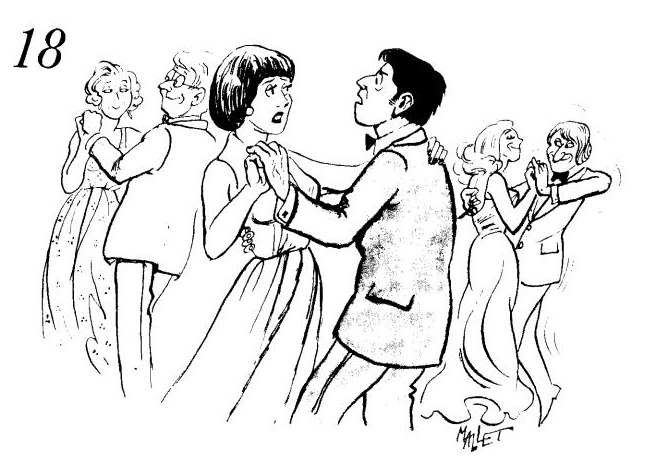
Harry and Bob were neighbours, and they worked in the same bank. They were young and they often went out together. Then the bank sent both of them to a new town. They did not know any other people there, so on the first Saturday, Bob said to Harry, "There's a dance at the Bridge Hotel this evening. Let's go there. Perhaps we'll meet some nice girls.' Harry answered, 'All right,' and they went went to the dance together. They danced several times with the girls there, and then Harry went to Bob and pointed to one girl. 'She's a nasty one,' he said angrily. 'Don't talk to her.' Bob was surprised. 'Why? What happened?' he asked his friend. Harry answered, 'She said to me, "Do you dance?" Bob laughed and said, 'But that isn't a nasty thing to say!" 'She said it while I was dancing with her,' Harry answered angrily. 🔊 ترجمه متن
Harry and Bob were neighbours, and they worked in the same bank. They were young and they often went out together. Then the bank sent both of them to a new town. They did not know any other people there, so on the first Saturday, Bob said to Harry, "There's a dance at the Bridge Hotel this evening. Let's go there. Perhaps we'll meet some nice girls.' Harry answered, 'All right,' and they went went to the dance together. They danced several times with the girls there, and then Harry went to Bob and pointed to one girl. 'She's a nasty one,' he said angrily. 'Don't talk to her.' Bob was surprised. 'Why? What happened?' he asked his friend. Harry answered, 'She said to me, "Do you dance?" Bob laughed and said, 'But that isn't a nasty thing to say!" 'She said it while I was dancing with her,' Harry answered angrily. 🔊 ترجمه متن
Passage 18
🔊
درس 18
Harry and Bob were neighbours, and they worked in the same bank.
🔊
هری و باب همسایه بودند و در یک بانک کار میکردند.
They were young and they often went out together.
🔊
آنها جوان بودند و اغلب با هم بیرون میرفتند.
Then the bank sent both of them to a new town.
🔊
سپس بانک هر دوی آنها را به یک شهر جدید فرستاد.
They did not know any other people there, so on the first Saturday, Bob said to Harry, “There’s a dance at the Bridge Hotel this evening. Let’s go there. Perhaps we’ll meet some nice girls.”
🔊
آنها هیچکس دیگری را آنجا نمیشناختند، پس در اولین شنبه، باب به هری گفت: «امشب در هتل بریج یک مجلس رقص هست. بیا بریم آنجا. شاید چند دختر خوب بشناسیم.»
bob answered, ‘All right,’ and they went to the dance together.
🔊
هری جواب داد: «باشه.» و با هم به رقص رفتند.
They danced several times with the girls there, and then Harry went to Bob and pointed to one girl.
🔊
آنها چند بار با دخترهای آنجا رقصیدند و بعد هری پیش باب رفت و به دختری اشاره کرد.
‘She’s a nasty one,’ he said angrily. ‘Don’t talk to her.’
🔊
او با عصبانیت گفت: «اون یکی بداخلاقه. باهاش حرف نزن.»
Bob was surprised. ‘Why? What happened?’ he asked his friend.
🔊
باب تعجب کرد. پرسید: «چرا؟ چی شده؟»
Harry answered, ‘She said to me, “Do you dance?”’
🔊
هری جواب داد: «او به من گفت: “رقص بلدی؟”»
Bob laughed and said, ‘But that isn’t a nasty thing to say!’
🔊
باب خندید و گفت: «اما این که حرف بدی نیست!»
‘She said it while I was dancing with her,’ Harry answered angrily.
🔊
هری با عصبانیت جواب داد: «او این را وقتی به من گفت که داشتم باهاش میرقصیدم!»
Passage 19
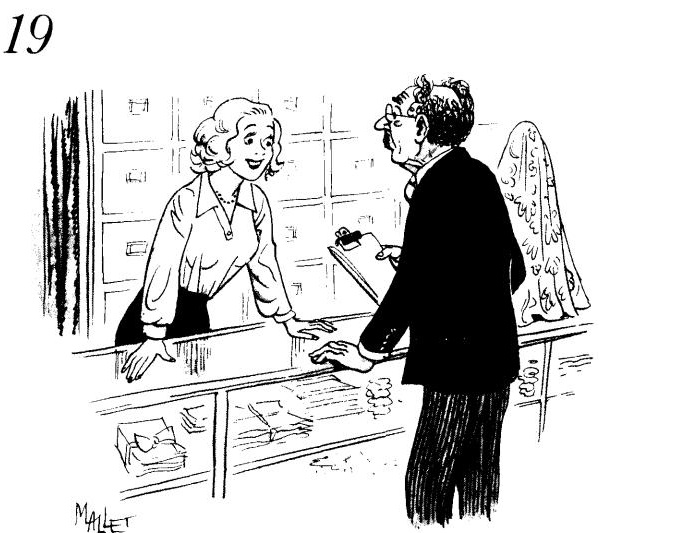
Mr Miller had a shop in a big town. He sold ladies' clothes, and he always had two or three shopgirls to help him. They were always young, because they were cheaper than older women, but none of them worked for him for very long, because they were young, and they did not meet many boys in a women's shop. Last month a pretty girl came to work for him. Her name was Helen, and she was very good. After a few days, Mr Miller saw a young man come into the shoр. He went straight to Helen, spoke to her for a few minutes and then went out of the shop again. Mr Miller was rather surprised, and when the young man left, he went to Helen and said, 'That young man didn't buy anything. What did he want to see?" 5. The young man wanted Helen answered, 'Me, at half past five. 🔊 ترجمه متن
Mr Miller had a shop in a big town. He sold ladies' clothes, and he always had two or three shopgirls to help him. They were always young, because they were cheaper than older women, but none of them worked for him for very long, because they were young, and they did not meet many boys in a women's shop. Last month a pretty girl came to work for him. Her name was Helen, and she was very good. After a few days, Mr Miller saw a young man come into the shoр. He went straight to Helen, spoke to her for a few minutes and then went out of the shop again. Mr Miller was rather surprised, and when the young man left, he went to Helen and said, 'That young man didn't buy anything. What did he want to see?" 5. The young man wanted Helen answered, 'Me, at half past five. 🔊 ترجمه متن
Passage 19
🔊
درس 19
Mr Miller had a shop in a big town.
🔊
آقای میلر یک مغازه در یک شهر بزرگ داشت.
He sold ladies’ clothes, and he always had two or three shopgirls to help him.
🔊
او لباس زنانه میفروخت و همیشه دو یا سه فروشندهٔ زن داشت که به او کمک میکردند.
They were always young, because they were cheaper than older women, but none of them worked for him for very long, because they were young, and they did not meet many boys in a women’s shop.
🔊
آنها همیشه جوان بودند، چون از زنان مسن ارزانتر بودند، اما هیچکدام برای مدت طولانی برای او کار نمیکردند، چون جوان بودند و در یک مغازهٔ زنانه با پسرهای زیادی آشنا نمیشدند.
Last month a pretty girl came to work for him.
🔊
ماه گذشته یک دختر زیبا برای کار نزد او آمد.
Her name was Helen, and she was very good.
🔊
نام او هلن بود و خیلی خوب کار میکرد.
After a few days, Mr Miller saw a young man come into the shop.
🔊
بعد از چند روز، آقای میلر دید که یک مرد جوان وارد مغازه شد.
He went straight to Helen, spoke to her for a few minutes and then went out of the shop again.
🔊
او مستقیم پیش هلن رفت، چند دقیقه با او صحبت کرد و بعد دوباره از مغازه بیرون رفت.
Mr Miller was rather surprised, and when the young man left, he went to Helen and said, ‘That young man didn’t buy anything. What did he want to see?’
🔊
آقای میلر تا حدی تعجب کرد و وقتی آن مرد جوان رفت، پیش هلن رفت و گفت: «آن مرد جوان چیزی نخرید. برای دیدن چه چیزی آمده بود؟»
Helen answered, 'Me, at half past five.
🔊
هلن جواب داد: «من را، ساعت پنج و نیم.»
Passage 20
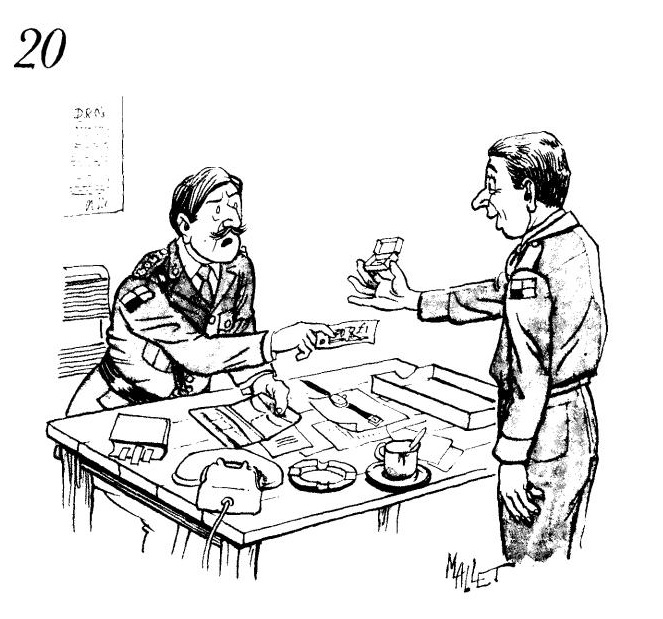
When Jimmy was a boy, he always liked watches and clocks very much, When he was eighteen years old, he went into the army, and after a year, he began to teach himself to mend watches. A lot of his friends brought him broken watches, and he mended them for them. Then his captain heard about this, and one day he brought him a watch too and said, 'My watch has stopped. Can you mend it for me, please?" Jimmy said, 'Yes, sir, I can.' After a few days, he brought the watch back to the captain. 'How much do I owe you?' the oflicer asked. One pound, sir, Jimmy answered. Then he took a small box out of his pocket and gave it to the captain, saying, 'Here are three wheels from your watch. I didn't find a place for them when I put everything back. 🔊 ترجمه متن
When Jimmy was a boy, he always liked watches and clocks very much, When he was eighteen years old, he went into the army, and after a year, he began to teach himself to mend watches. A lot of his friends brought him broken watches, and he mended them for them. Then his captain heard about this, and one day he brought him a watch too and said, 'My watch has stopped. Can you mend it for me, please?" Jimmy said, 'Yes, sir, I can.' After a few days, he brought the watch back to the captain. 'How much do I owe you?' the oflicer asked. One pound, sir, Jimmy answered. Then he took a small box out of his pocket and gave it to the captain, saying, 'Here are three wheels from your watch. I didn't find a place for them when I put everything back. 🔊 ترجمه متن
Passage 20
🔊
درس 20
When Jimmy was a boy, he always liked watches and clocks very much.
🔊
وقتی جیمی بچه بود، همیشه ساعت و عقربهنما را خیلی دوست داشت.
When he was eighteen years old, he went into the army, and after a year, he began to teach himself to mend watches.
🔊
وقتی هجده سالش بود وارد ارتش شد و بعد از یک سال شروع کرد خودش به تعمیر ساعتها یاد بگیرد.
A lot of his friends brought him broken watches, and he mended them for them.
🔊
خیلی از دوستانش ساعتهای خراب را برای او میآوردند و او آنها را برایشان تعمیر میکرد.
Then his captain heard about this, and one day he brought him a watch too and said, 'My watch has stopped. Can you mend it for me, please?"
🔊
بعد فرماندهاش از این موضوع باخبر شد و یک روز خودش هم یک ساعت آورد و گفت: «ساعت من از کار افتاده. میتونی لطفاً برای من تعمیرش کنی؟»
Jimmy said, ‘Yes, sir, I can.’
🔊
جیمی گفت: «بله قربان، میتوانم.»
After a few days, he brought the watch back to the captain.
🔊
چند روز بعد، ساعت را به فرمانده برگرداند.
‘How much do I owe you?’ the officer asked.
🔊
آن افسر پرسید: «چقدر بدهکارِ شما هستم؟»
One pound, sir, Jimmy answered.
🔊
جیمی گفت: «یک پوند، قربان.»
Then he took a small box out of his pocket and gave it to the captain, saying, 'Here are three wheels from your watch. I didn’t find a place for them when I put everything back.
🔊
بعد یک جعبهٔ کوچک از جیبش درآورد و به فرمانده داد و گفت: «این سه چرخ (قطعهٔ چرخدار) از ساعتِ شماست. وقتی همه چیز را سر جایش گذاشتم، جایی برایشان پیدا نکردم.»
Passage 21
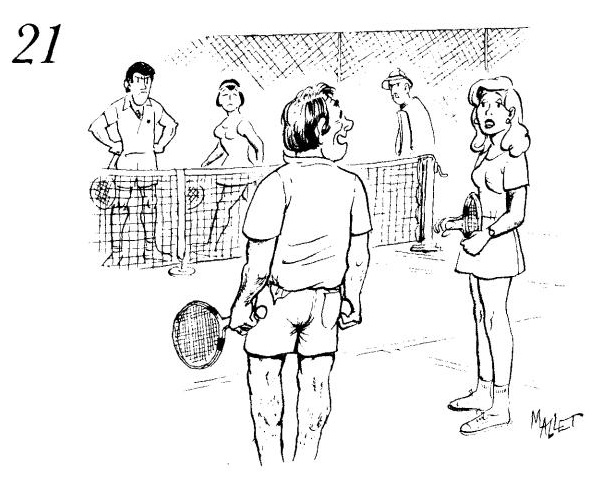
When Alan was young, he played a lot of football, and he was very good at it, but then he went and worked in a town, and there was no team for him there, so he stopped playing. Then he began to get rather fat, so he thought, T've stopped playing football, and now I'm getting fat. What am I going to do?" He thought about it for a few days, and then he said to himself, 'I know: I'll play tennis. He had a few lessons, and then played for a few months. He met a nice girl at the tennis chub one day, and they played a game of tennis against another young man and woman. Alan played very badly, and was very angry with himself. 'I've never played as badly as this before, he said to the girl. Oh, she said, 'you have played before, have you?" 🔊 ترجمه متن
When Alan was young, he played a lot of football, and he was very good at it, but then he went and worked in a town, and there was no team for him there, so he stopped playing. Then he began to get rather fat, so he thought, T've stopped playing football, and now I'm getting fat. What am I going to do?" He thought about it for a few days, and then he said to himself, 'I know: I'll play tennis. He had a few lessons, and then played for a few months. He met a nice girl at the tennis chub one day, and they played a game of tennis against another young man and woman. Alan played very badly, and was very angry with himself. 'I've never played as badly as this before, he said to the girl. Oh, she said, 'you have played before, have you?" 🔊 ترجمه متن
Passage 21
🔊
درس 21
When Alan was young, he played a lot of football, and he was very good at it, but then he went and worked in a town, and there was no team for him there, so he stopped playing.
🔊
وقتی آلن جوان بود، خیلی فوتبال بازی میکرد و در آن خیلی خوب بود، اما بعد به شهری رفت و آنجا کار پیدا کرد و برای او تیمی نبود، پس بازی کردن را کنار گذاشت.
Then he began to get rather fat, so he thought, “I’ve stopped playing football, and now I’m getting fat. What am I going to do?”
🔊
بعد شروع کرد کمی چاق شود، پس با خودش فکر کرد: «فوتبال را کنار گذاشتم و حالا دارم چاق میشوم. حالا باید چه کار کنم؟»
He thought about it for a few days, and then he said to himself, “I know: I’ll play tennis.”
🔊
چند روز به این موضوع فکر کرد و بعد به خودش گفت: «میدانم: تنیس بازی میکنم.»
He had a few lessons, and then played for a few months.
🔊
چند جلسه آموزش گرفت و بعد چند ماهی بازی کرد.
He met a nice girl at the tennis club one day, and they played a game of tennis against another young man and woman.
🔊
یک روز در باشگاه تنیس با دختری خوشبرخورد آشنا شد و با هم در مقابل یک مرد و زن جوان دیگر تنیس بازی کردند.
Alan played very badly, and was very angry with himself.
🔊
آلن خیلی بد بازی کرد و از دست خودش خیلی عصبانی شد.
“I’ve never played as badly as this before,” he said to the girl.
🔊
به دختر گفت: «تا به حال اینقدر بد بازی نکرده بودم.»
“Oh,” she said, “you have played before, have you?”
🔊
دختر گفت: «اوه، پس قبلاً بازی کردهای، درسته؟»
Passage 22
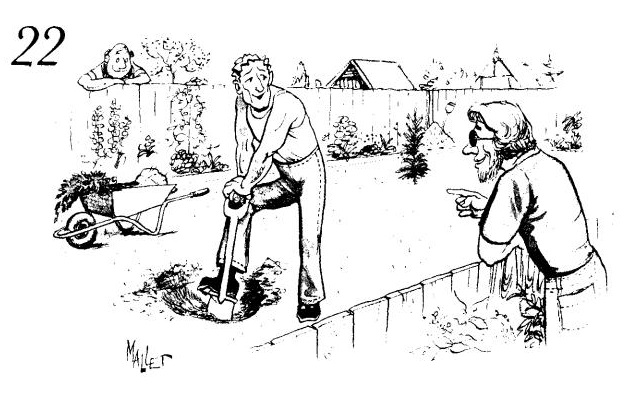
Bruce was an Australian and worked for a newspaper in Sydney. Then he thought, I want to see Europe, so I'll go to England and work for a newspaper there for a few years. He flew to London and soon got work, because he was good at his job. He lived in a small but comfortable house near London, and he had a small garden. He enjoyed working in it on Saturdays and Sundays. He had nice neighbours on both sides, and they often worked in their gardens on Saturdays and Sundays too, and then they talked and joked together. One day he was digging a hole in his garden to plant a bush when one of these neighbours came to the fence between the two gardens and looked at Bruce's work. He laughed and said, 'Are you making a swimming-pool? Oh, no, answered Bruce, T'm going home. 🔊 ترجمه متن
Bruce was an Australian and worked for a newspaper in Sydney. Then he thought, I want to see Europe, so I'll go to England and work for a newspaper there for a few years. He flew to London and soon got work, because he was good at his job. He lived in a small but comfortable house near London, and he had a small garden. He enjoyed working in it on Saturdays and Sundays. He had nice neighbours on both sides, and they often worked in their gardens on Saturdays and Sundays too, and then they talked and joked together. One day he was digging a hole in his garden to plant a bush when one of these neighbours came to the fence between the two gardens and looked at Bruce's work. He laughed and said, 'Are you making a swimming-pool? Oh, no, answered Bruce, T'm going home. 🔊 ترجمه متن
Passage 22
🔊
درس 22
Bruce was an Australian and worked for a newspaper in Sydney.
🔊
بروس یک استرالیایی بود و برای یک روزنامه در سیدنی کار میکرد.
Then he thought, “I want to see Europe, so I’ll go to England and work for a newspaper there for a few years.”
🔊
بعد با خودش فکر کرد: «میخواهم اروپا را ببینم، پس به انگلستان میروم و چند سال آنجا برای یک روزنامه کار میکنم.»
He flew to London and soon got work, because he was good at his job.
🔊
او با هواپیما به لندن رفت و بهزودی کار پیدا کرد، چون در کارش مهارت داشت.
He lived in a small but comfortable house near London, and he had a small garden.
🔊
او در خانهای کوچک اما راحت نزدیک لندن زندگی میکرد و یک باغچهٔ کوچک هم داشت.
He enjoyed working in it on Saturdays and Sundays.
🔊
او از کار کردن در آن باغچه در روزهای شنبه و یکشنبه لذت میبرد.
He had nice neighbours on both sides, and they often worked in their gardens on Saturdays and Sundays too, and then they talked and joked together.
🔊
او در دو طرفش همسایههای خوبی داشت، و آنها هم اغلب شنبهها و یکشنبهها در باغچههای خودشان کار میکردند و بعد با هم صحبت میکردند و شوخی میکردند.
One day he was digging a hole in his garden to plant a bush when one of these neighbours came to the fence between the two gardens and looked at Bruce’s work.
🔊
یک روز که داشت در باغچهاش برای کاشتن یک بوته چالهای میکند، یکی از آن همسایهها به کنار حصار بین دو باغچه آمد و به کار بروس نگاه کرد.
He laughed and said, “Are you making a swimming-pool?”
🔊
خندید و گفت: «دارى استخر شنا میسازی؟»
“Oh, no,” answered Bruce, “I’m going home.”
🔊
بروس پاسخ داد: «اوه، نه، دارم میروم خانه.»
Passage 23
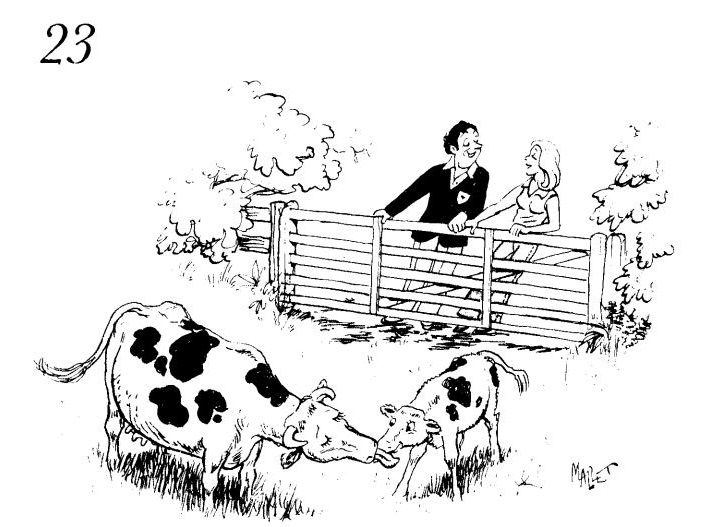
Dick lived in Oxford, and he had a new girl-friend. Her name was Daisy, and Dick liked her very much. One Sunday they went for a picnic in the country, and when they were walking to a nice place near a river, thev saw a cow and its calf. Look, Daisy, Dick said, 'that cow's giving its calf'a kiss. Isn't that nice? Daisy stopped and looked. Then she smiled and said, 'Yes, it is, Dick. It's very pretty. 'Doesn't it make you want to have a kiss too, Daisy?" Dick said then, looking at her. Daisy thought for a few seconds and then she said, 'No, it doesn't really, Dick. Does it make you want to have one? Yes, it does, Daisy, Dick answered, holding her hand. 'All right, then go and get a kiss, Daisy answered, 'and I'll wait here. It looks like a nice, quict cow. 🔊 ترجمه متن
Dick lived in Oxford, and he had a new girl-friend. Her name was Daisy, and Dick liked her very much. One Sunday they went for a picnic in the country, and when they were walking to a nice place near a river, thev saw a cow and its calf. Look, Daisy, Dick said, 'that cow's giving its calf'a kiss. Isn't that nice? Daisy stopped and looked. Then she smiled and said, 'Yes, it is, Dick. It's very pretty. 'Doesn't it make you want to have a kiss too, Daisy?" Dick said then, looking at her. Daisy thought for a few seconds and then she said, 'No, it doesn't really, Dick. Does it make you want to have one? Yes, it does, Daisy, Dick answered, holding her hand. 'All right, then go and get a kiss, Daisy answered, 'and I'll wait here. It looks like a nice, quict cow. 🔊 ترجمه متن
Passage 23
🔊
درس 23
Dick lived in Oxford, and he had a new girl-friend.
🔊
دیک در آکسفورد زندگی میکرد و یک دوستدختر جدید داشت.
Her name was Daisy, and Dick liked her very much.
🔊
نام او دیزی بود و دیک او را خیلی دوست داشت.
One Sunday they went for a picnic in the country, and when they were walking to a nice place near a river, they saw a cow and its calf.
🔊
یک یکشنبه برای پیکنیک به خارج شهر رفتند و وقتی داشتند به سمت جای خوبی نزدیک رودخانه قدم میزدند، یک گاو و بچهگاوش را دیدند.
“Look, Daisy,” Dick said, “that cow’s giving its calf a kiss. Isn’t that nice?”
🔊
دیک گفت: «نگاه کن دیزی، آن گاو دارد به بچهاش یک بوسه میدهد. چه قشنگ، نه؟»
Daisy stopped and looked. Then she smiled and said, “Yes, it is, Dick. It’s very pretty.”
🔊
دیزی ایستاد و نگاه کرد. بعد لبخند زد و گفت: «بله، دیک. خیلی قشنگ است.»
“Doesn’t it make you want to have a kiss too, Daisy?” Dick said then, looking at her.
🔊
بعد دیک در حالی که به او نگاه میکرد گفت: «این باعث نمیشود تو هم دلت یک بوسه بخواهد، دیزی؟»
Daisy thought for a few seconds and then she said, “No, it doesn’t really, Dick. Does it make you want to have one?”
🔊
دیزی چند ثانیه فکر کرد و بعد گفت: «نه، واقعاً نه، دیک. برای تو باعث میشود دلت بخواهد یکی داشته باشی؟»
“Yes, it does, Daisy,” Dick answered, holding her hand.
🔊
دیک در حالی که دستش را میگرفت جواب داد: «بله، دیزی، برای من اینطور میشود.»
“All right, then go and get a kiss,” Daisy answered, “and I’ll wait here. It looks like a nice, quiet cow.”
🔊
دیزی جواب داد: «خیلی خوب، پس برو و یک بوسه بگیر، من اینجا منتظر میمانم. به نظر یک گاو آرام و خوب میآید.»
Passage 24
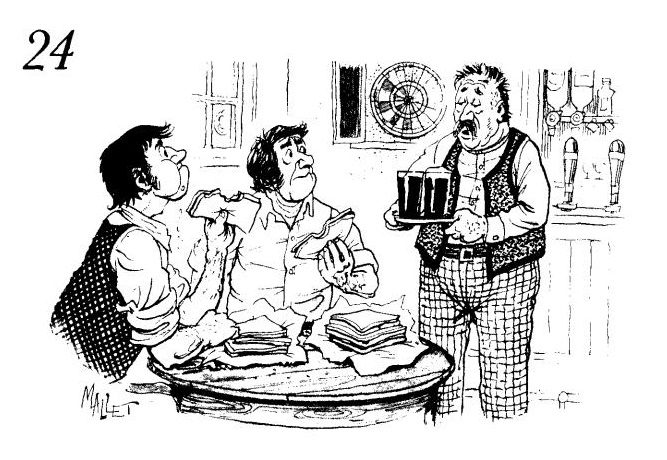
Joe and Fred were helping to build a house in a village. The weather was very warm, there was a lot of dust everywhere, and by half past twelve, they were very thirsty, so they stopped work to have their Junch. They found the nearest small bar, went in and sat down with their sandwiches. 'Good afternoon, gentlemen. What can I get you?" the man behind the bar asked. Joe looked at Fred and said, 'Beer, I think. Yes, a pint of beer cach. Is that all right for you, Fred? 'Yes, that's all right,' Fred said. Then he turned to the man behind the bar and said, 'And I want it in a clean glass! Don't forget that. The man behind the bar filled the glasses and brought them to Joe and Fred. Then he said, Which of you asked for the clean glass?" 🔊 ترجمه متن
Joe and Fred were helping to build a house in a village. The weather was very warm, there was a lot of dust everywhere, and by half past twelve, they were very thirsty, so they stopped work to have their Junch. They found the nearest small bar, went in and sat down with their sandwiches. 'Good afternoon, gentlemen. What can I get you?" the man behind the bar asked. Joe looked at Fred and said, 'Beer, I think. Yes, a pint of beer cach. Is that all right for you, Fred? 'Yes, that's all right,' Fred said. Then he turned to the man behind the bar and said, 'And I want it in a clean glass! Don't forget that. The man behind the bar filled the glasses and brought them to Joe and Fred. Then he said, Which of you asked for the clean glass?" 🔊 ترجمه متن
Passage 24
🔊
درس 24
Joe and Fred were helping to build a house in a village.
🔊
جو و فرد داشتند به ساختن خانهای در یک روستا کمک میکردند.
The weather was very warm, there was a lot of dust everywhere, and by half past twelve, they were very thirsty, so they stopped work to have their lunch.
🔊
هوا خیلی گرم بود، همهجا پر از گرد و غبار بود و تا ساعت دوازده و نیم، آنها خیلی تشنه شده بودند، بنابراین کار را متوقف کردند تا ناهارشان را بخورند.
They found the nearest small bar, went in and sat down with their sandwiches.
🔊
آنها نزدیکترین بار کوچک را پیدا کردند، وارد شدند و با ساندویچهایشان نشستند.
“Good afternoon, gentlemen. What can I get you?” the man behind the bar asked.
🔊
مرد پشت پیشخوان پرسید: «عصر بخیر آقایان. چه چیزی برایتان بیاورم؟»
Joe looked at Fred and said, “Beer, I think. Yes, a pint of beer each. Is that all right for you, Fred?”
🔊
جو به فرد نگاه کرد و گفت: «فکر میکنم آبجو. بله، برای هر کدام یک لیوان بزرگ آبجو. برای تو خوب است، فرد؟»
“Yes, that’s all right,” Fred said.
🔊
فرد گفت: «بله، خوب است.»
Then he turned to the man behind the bar and said, “And I want it in a clean glass! Don’t forget that.”
🔊
سپس او رو به مرد پشت پیشخوان کرد و گفت: «و من آن را در یک لیوان تمیز میخواهم! این را فراموش نکن.»
The man behind the bar filled the glasses and brought them to Joe and Fred.
🔊
مرد پشت پیشخوان لیوانها را پر کرد و آنها را نزد جو و فرد آورد.
Then he said, “Which of you asked for the clean glass?”
🔊
سپس گفت: «کدام یک از شما لیوان تمیز خواست؟»
Passage 25
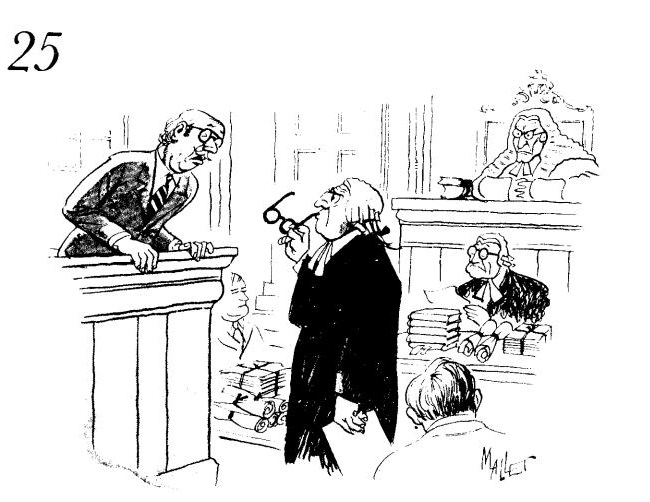
Mr Johnson was a rich old man. He lived in a beautiful house in the country with lots of servants, but his wife was dead, and de did not have any children. Then he died suddenly, and people said, 'His servants killed him. because they wanted his monev." But the servants said. 'No, he killed himself. The police came and asked the servants a lot of questions, and after a few weeks, there was a big trial. There were two famous lawvers and several important witnesses. "Tell me, one of the lawyers said to a witness one day, 'did Mr Johnson often talk to himself when he was alone? I don't know, the witness answered at once. 'You don't know?' the lawyer repeated angrily. You don't know? But you were his best friend, weren't you? Why don't you know?" 'Because I was never with him when he was alone,' the witness answered. 🔊 ترجمه متن
Mr Johnson was a rich old man. He lived in a beautiful house in the country with lots of servants, but his wife was dead, and de did not have any children. Then he died suddenly, and people said, 'His servants killed him. because they wanted his monev." But the servants said. 'No, he killed himself. The police came and asked the servants a lot of questions, and after a few weeks, there was a big trial. There were two famous lawvers and several important witnesses. "Tell me, one of the lawyers said to a witness one day, 'did Mr Johnson often talk to himself when he was alone? I don't know, the witness answered at once. 'You don't know?' the lawyer repeated angrily. You don't know? But you were his best friend, weren't you? Why don't you know?" 'Because I was never with him when he was alone,' the witness answered. 🔊 ترجمه متن
Passage 25
🔊
درس 25
Mr Johnson was a rich old man.
🔊
آقای جانسون پیرمرد ثروتمندی بود.
He lived in a beautiful house in the country with lots of servants, but his wife was dead, and he did not have any children.
🔊
او در خانهای زیبا در حومه شهر با خدمتکاران زیادی زندگی میکرد، اما همسرش فوت کرده بود و هیچ فرزندی نداشت.
Then he died suddenly, and people said, “His servants killed him, because they wanted his money.”
🔊
سپس او بهطور ناگهانی درگذشت و مردم گفتند: «خدمتکارانش او را کشتهاند، چون پولش را میخواستند.»
But the servants said, “No, he killed himself.”
🔊
اما خدمتکاران گفتند: «نه، او خودش را کشت.»
The police came and asked the servants a lot of questions, and after a few weeks, there was a big trial.
🔊
پلیس آمد و سؤالات زیادی از خدمتکاران پرسید و بعد از چند هفته، یک دادگاه بزرگ تشکیل شد.
There were two famous lawyers and several important witnesses.
🔊
دو وکیل مشهور و چندین شاهد مهم در آنجا حضور داشتند.
“Tell me,” one of the lawyers said to a witness one day, “did Mr Johnson often talk to himself when he was alone?”
🔊
یک روز یکی از وکلا به یکی از شاهدان گفت: «به من بگو، آیا آقای جانسون وقتی تنها بود، اغلب با خودش صحبت میکرد؟»
“I don’t know,” the witness answered at once.
🔊
شاهد بلافاصله پاسخ داد: «نمیدانم.»
“You don’t know?” the lawyer repeated angrily. “You don’t know? But you were his best friend, weren’t you? Why don’t you know?”
🔊
وکیل با عصبانیت تکرار کرد: «نمیدانی؟ نمیدانی؟ اما تو بهترین دوست او بودی، مگر نبودی؟ چرا نمیدانی؟»
“Because I was never with him when he was alone,” the witness answered.
🔊
شاهد پاسخ داد: «چون من هیچوقت وقتی او تنها بود، پیشش نبودم.»
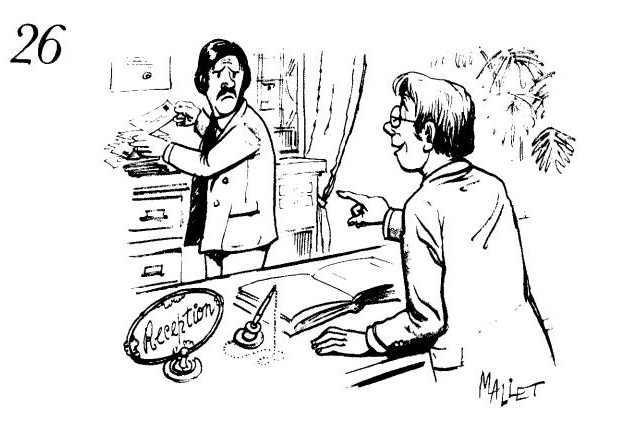
Passage 26
When Pat was twenty-one years old, he began to work in a small office in a city. At first he never travelled anywhere, but then he became a little more important, and he began to go to other cities for a few days to do some work there. Of course, he stayed in small hotels, when he was away from his home, but he did not know very much about living in hotels at first. Onc evening when he was staying in a small hotel in Sheffield, he came back from the oflice and said to the clerk at the desk in the hotel, 'Good evening. Did any letters come for me today, please?" The clerk was busy, but when he finished his work, he went to a big pile of letters and said, 'What name, please?" 'Well,' answered Pat, 'the name will be on the letters. 🔊 ترجمه متن
When Pat was twenty-one years old, he began to work in a small office in a city. At first he never travelled anywhere, but then he became a little more important, and he began to go to other cities for a few days to do some work there. Of course, he stayed in small hotels, when he was away from his home, but he did not know very much about living in hotels at first. Onc evening when he was staying in a small hotel in Sheffield, he came back from the oflice and said to the clerk at the desk in the hotel, 'Good evening. Did any letters come for me today, please?" The clerk was busy, but when he finished his work, he went to a big pile of letters and said, 'What name, please?" 'Well,' answered Pat, 'the name will be on the letters. 🔊 ترجمه متن
Passage 26
🔊
درس 26
When Pat was twenty-one years old, he began to work in a small office in a city.
🔊
وقتی پت بیست و یک ساله بود، شروع به کار در یک دفتر کوچک در یک شهر کرد.
At first he never travelled anywhere, but then he became a little more important, and he began to go to other cities for a few days to do some work there.
🔊
در ابتدا او هرگز به جایی سفر نمیکرد، اما بعد کمی مهمتر شد و شروع کرد به رفتن به شهرهای دیگر برای چند روز تا در آنجا کاری انجام دهد.
Of course, he stayed in small hotels when he was away from his home, but he did not know very much about living in hotels at first.
🔊
البته، وقتی از خانهاش دور بود در هتلهای کوچک اقامت میکرد، اما در ابتدا چیز زیادی دربارهٔ زندگی در هتلها نمیدانست.
One evening when he was staying in a small hotel in Sheffield, he came back from the office and said to the clerk at the desk in the hotel, “Good evening. Did any letters come for me today, please?”
🔊
یک شب که در یک هتل کوچک در شفیلد اقامت داشت، از دفتر کار برگشت و به متصدی پشت میز هتل گفت: «عصر بخیر. آیا امروز نامهای برای من آمده است، لطفاً؟»
The clerk was busy, but when he finished his work, he went to a big pile of letters and said, “What name, please?”
🔊
متصدی سرش شلوغ بود، اما وقتی کارش را تمام کرد، به سراغ توده بزرگ نامهها رفت و گفت: «لطفاً نامتان چیست؟»
“Well,” answered Pat, “the name will be on the letters.”
🔊
پت جواب داد: «خب، نام باید روی نامهها باشد.»
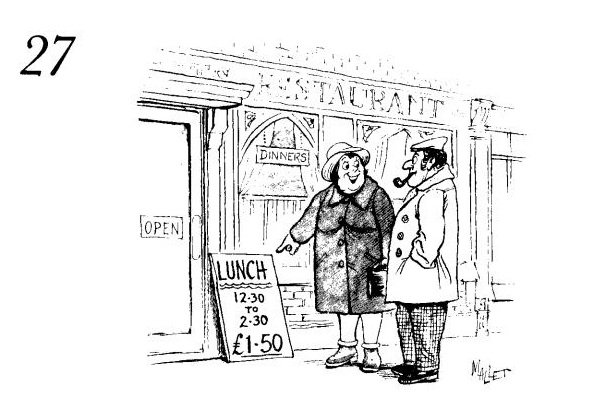
Passage 27
Mr Reece was a farmer. He and his wife grew a lot of things and they had a few cows. They worked very hard. One day, Mr Reece said to his wife, 'Let's go to Portsmouth next Sunday. We can have a good lunch there, and then we can go to the cinema. His wife was very happy when she heard this, because she and her husband always ate a lot, and she did not like cooking three times a day every day. They went to Portsmouth by train and walked about for an hour. Then, when it was 12 o'clock, they wanted to have a meal. They looked at several restaurants. In one of them there was a notice outside: 'Lunch: 12.30 to 2.30: £1.50. 'Well, that's good,' Mrs Recce said. 'We can eat for two hours for £1.50 here! This is the place for us. 🔊 ترجمه متن
Mr Reece was a farmer. He and his wife grew a lot of things and they had a few cows. They worked very hard. One day, Mr Reece said to his wife, 'Let's go to Portsmouth next Sunday. We can have a good lunch there, and then we can go to the cinema. His wife was very happy when she heard this, because she and her husband always ate a lot, and she did not like cooking three times a day every day. They went to Portsmouth by train and walked about for an hour. Then, when it was 12 o'clock, they wanted to have a meal. They looked at several restaurants. In one of them there was a notice outside: 'Lunch: 12.30 to 2.30: £1.50. 'Well, that's good,' Mrs Recce said. 'We can eat for two hours for £1.50 here! This is the place for us. 🔊 ترجمه متن
Passage 27
🔊
درس 27
Mr Reece was a farmer.
🔊
آقای ریس یک کشاورز بود.
He and his wife grew a lot of things and they had a few cows.
🔊
او و همسرش محصولات زیادی پرورش میدادند و چند گاو داشتند.
They worked very hard.
🔊
آنها بسیار سخت کار میکردند.
One day, Mr Reece said to his wife, 'Let’s go to Portsmouth next Sunday.
🔊
یک روز، آقای ریس به همسرش گفت: «بیا یکشنبه آینده به پورتسموث برویم.»
We can have a good lunch there, and then we can go to the cinema.’
🔊
«ما میتوانیم آنجا یک ناهار خوب بخوریم و بعد به سینما برویم.»
His wife was very happy when she heard this, because she and her husband always ate a lot, and she did not like cooking three times a day every day.
🔊
همسرش وقتی این را شنید خیلی خوشحال شد، چون او و شوهرش همیشه زیاد غذا میخوردند و او دوست نداشت هر روز سه بار آشپزی کند.
They went to Portsmouth by train and walked about for an hour.
🔊
آنها با قطار به پورتسموث رفتند و یک ساعتی را پیادهروی کردند.
Then, when it was 12 o’clock, they wanted to have a meal.
🔊
سپس، وقتی ساعت ۱۲ شد، آنها خواستند که وعدهای غذا بخورند.
They looked at several restaurants.
🔊
آنها به چند رستوران نگاه کردند.
In one of them there was a notice outside: ‘Lunch: 12.30 to 2.30: £1.50.’
🔊
در بیرون یکی از آنها تابلویی بود که روی آن نوشته شده بود: «ناهار: ۱۲:۳۰ تا ۲:۳۰: ۱.۵۰ پوند.»
‘Well, that’s good,’ Mrs Reece said.
🔊
خانم ریس گفت: «خب، این خوب است.»
'We can eat for two hours for £1.50 here!
🔊
«ما میتوانیم اینجا با ۱.۵۰ پوند به مدت دو ساعت غذا بخوریم!»
This is the place for us.’
🔊
«اینجا همان جایی است که به درد ما میخورد.»